
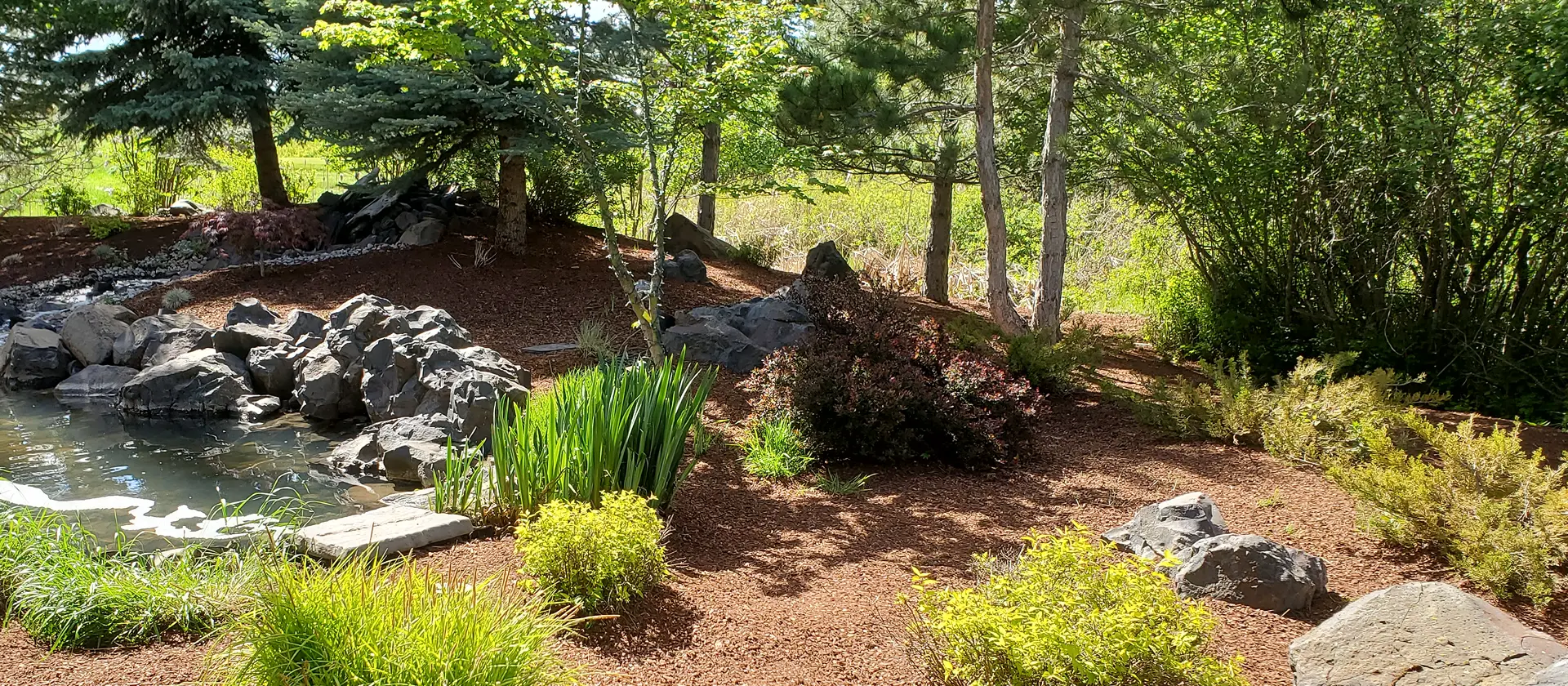
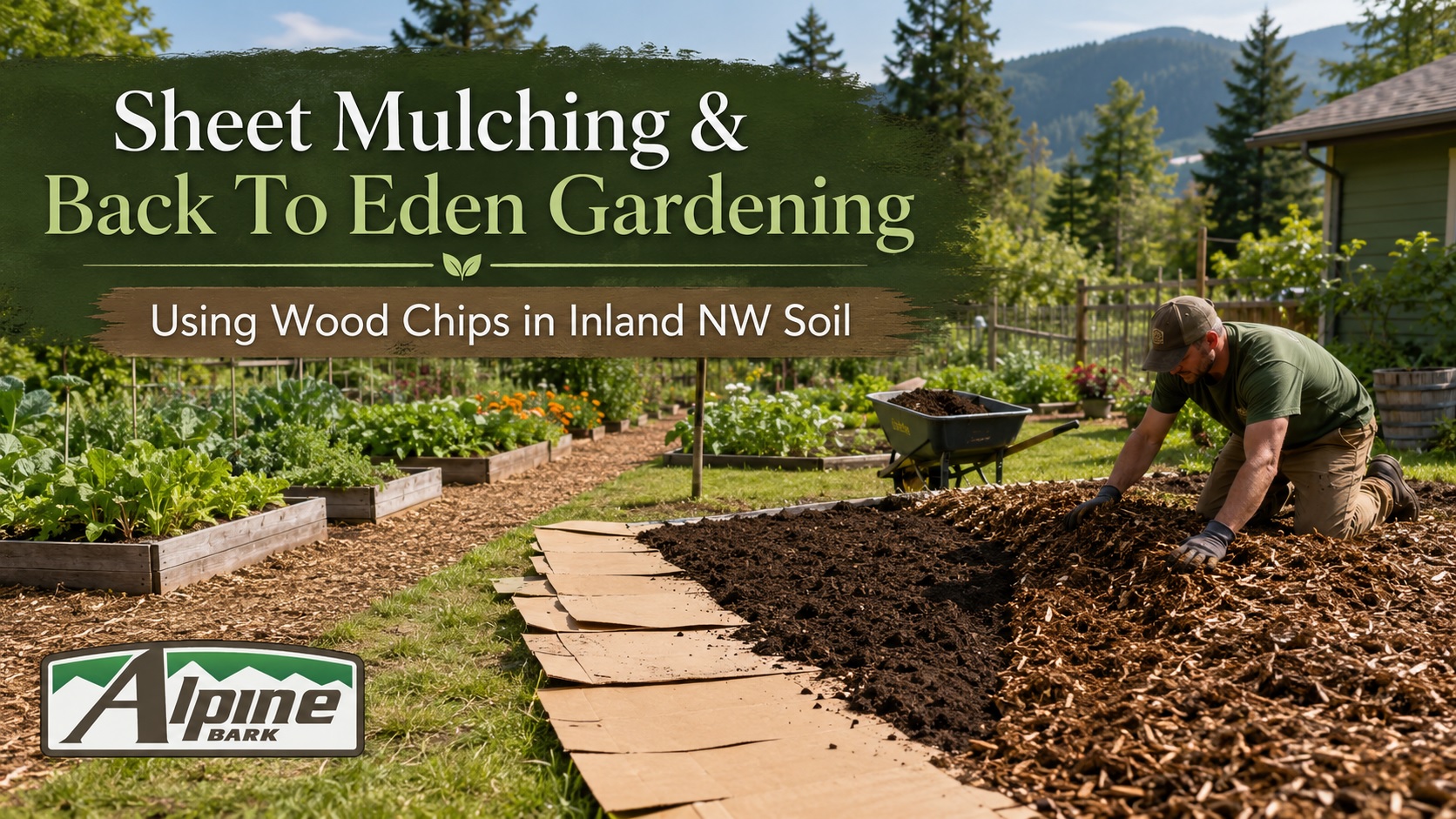
Sheet mulching converts lawn or weedy ground into a future garden by covering vegetation with overlapping cardboard, adding compost, and finishing with a deep wood-chip layer. The cardboard blocks sunlight, while compost and decomposing organic material gradually improve the soil beneath it. For Inland Northwest gardens, wood chips also reduce surface evaporation, moderate soil temperature, and create cleaner vegetable garden paths. Keep fresh chips on the surface rather than mixing them into the active root zone.
Dry summers, gravelly ground, compacted clay pockets, and stubborn lawn grass can make garden expansion difficult across Spokane, Coeur d’Alene, Post Falls, Hayden, and the Rathdrum Prairie. Conventional lawn removal often requires a sod cutter, tiller, hauling, and extensive soil repair.
At Alpine Bark Blowing, we help homeowners take a lower-disturbance approach using bulk wood chips, soil blends, and Barr-Tech compost. Sheet mulching can suppress existing vegetation while building a protected growing area from the surface down.
What Is Back to Eden Gardening?
Back to Eden gardening with wood chips is a no-dig or low-disturbance approach that keeps soil covered with coarse organic material. Rather than leaving bare ground exposed to sun, wind, weeds, and erosion, the gardener maintains a wood-chip layer around plants and between beds.
The chips break down slowly at the soil surface. Over time, decomposed material contributes organic matter while supporting a cooler, more protected root environment.
Wood chips should remain on top of the soil. Mixing fresh woody material deeply into vegetable beds can temporarily affect available nitrogen as microorganisms break it down. Surface application creates far less competition with plant roots.
What Is Sheet Mulching?
Sheet mulching with wood chips, also called lasagna gardening, uses layers of biodegradable materials to suppress lawn and prepare a future growing space.
Oregon State University describes sheet mulching as placing cardboard, newspaper, or heavy paper over existing soil to block light and smother vegetation. Compost and other organic materials are then layered above or below the barrier.
The process can be used to:
- Convert lawn into vegetable beds
- Expand perennial borders
- Establish food-forest areas
- Suppress annual weeds
- Create paths between raised beds
- Protect exposed soil through summer
Sheet mulching does not instantly create perfect garden soil. Difficult perennial weeds, severe compaction, poor drainage, and buried rock may still require correction.
How to Build a Sheet-Mulched Garden
1. Mark the Future Beds and Paths
Use a hose, stakes, or marking paint to outline raised beds, walking paths, fruit-tree zones, and access points.
Plan the layout before ordering material so compost reaches the growing areas while coarse chips cover pathways and unused soil.
2. Mow the Lawn Short
Cut grass and weeds as low as practical. Remove woody stems, large rocks, irrigation obstacles, and seed heads.
Persistent spreading weeds should be controlled before covering the site. Sheet mulch can suppress many plants, but it may not eliminate every established rhizome or root system.
3. Loosen Severe Compaction
A broadfork or digging fork can create openings in hard soil without fully tilling it. This helps air and water move below the new layers.
Avoid pulverizing the entire site. One advantage of no-dig preparation is preserving more of the existing soil structure.
4. Add Compost to the Growing Areas
Apply finished compost where vegetables, berries, shrubs, or perennials will be planted. Our soil and compost products provide organic material and planting blends for rebuilding depleted Inland Northwest ground.
Barr-Tech compost can also be professionally installed with blower equipment for large or difficult-to-access projects. Alpine Bark makes lawn and garden soil and Barr-Tech compost available for blower installation.
5. Install the Cardboard Barrier
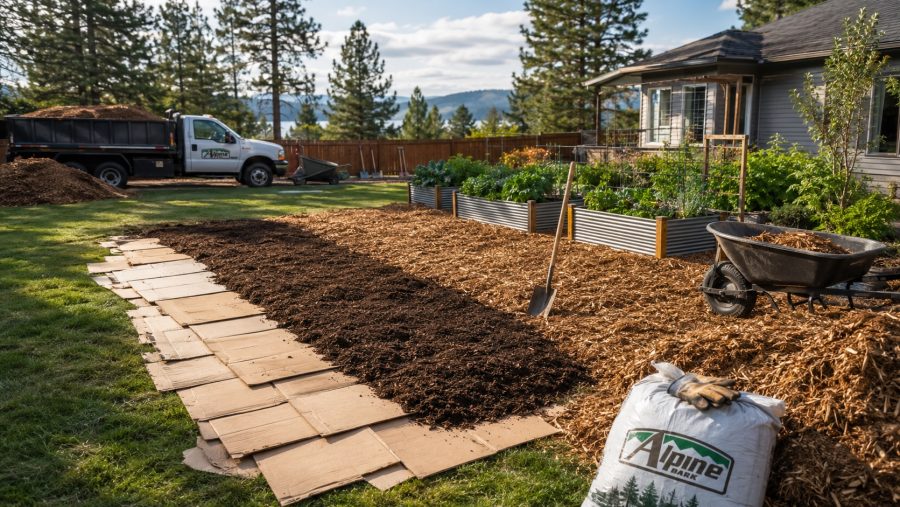
Use plain corrugated cardboard with tape, staples, and plastic labels removed. Overlap adjoining pieces so sunlight cannot reach the grass through open seams.
Wet the cardboard as it is installed. Moisture helps hold the sheets in place and begins the decomposition process. Extension guidance recommends overlapping the barrier and soaking it thoroughly.
Avoid using glossy, wax-coated, or heavily printed packaging.
6. Apply 4 to 6 Inches of Wood Chips
Cover the cardboard completely with coarse chips. A deeper layer provides stronger weed suppression and protects the paper from drying or blowing away.
Research-based guidance connects adequate wood-chip depth with better weed control and plant performance. Shallow layers can allow more weed growth than a properly maintained covering.
Use our yardage calculator to estimate the cubic yards required for a 4-to-6-inch application.
Wood Chips for Vegetable Garden Paths
Wood chips for vegetable garden paths help control mud, dust, weeds, and soil compaction. Washington State University specifically recommends chips for pathways and notes that cardboard beneath the mulch can improve weed suppression.
Keep the chips primarily in paths and on the soil surface. Plant vegetables into compost-enriched soil rather than directly into a deep layer of fresh wood.
In spring, allow planting soil to warm before placing organic mulch close to young crops. Inland Northwest guidance recommends waiting until the soil has warmed and seedlings are established before mulching vegetable beds.
Reduce Moisture Loss During Dry Summers
A maintained wood-chip layer shades the ground, reduces evaporation, limits crusting, and protects the soil from direct summer heat. WSU recommends maintaining coarse woody mulch over bare landscape soil to reduce moisture evaporation and improve soil condition.
Wood chips do not eliminate irrigation. Newly planted beds still require careful watering, and dry cardboard should be soaked during installation. However, covered soil can remain moist longer than exposed ground during hot Spokane and North Idaho summers.
Order Bulk Wood Chips and Compost
Alpine Bark Blowing supplies wood chips, soil, compost, bark, gravel, and decorative rock for residential and commercial projects across Spokane, Spokane Valley, Liberty Lake, Coeur d’Alene, Post Falls, Hayden, and nearby Inland Northwest communities. Pickup and delivery are available from our Hauser location.
Contact our team to order bulk wood chips and Barr-Tech compost for lawn conversions, vegetable garden paths, food forests, and organic garden beds.
Frequently Asked Questions
Can vegetables grow directly in wood chips?
Vegetables should grow in soil or compost beneath the chips. Pull the wood layer aside at planting points rather than filling the planting hole with fresh chips.
How long does sheet mulching take?
Grass suppression can begin quickly, but decomposition may require several months. Fall installation gives the layers time to soften through winter before spring planting.
Will wood chips permanently stop weeds?
No mulch eliminates every weed. Maintain adequate depth, close gaps, and remove new weeds before they produce seed.