
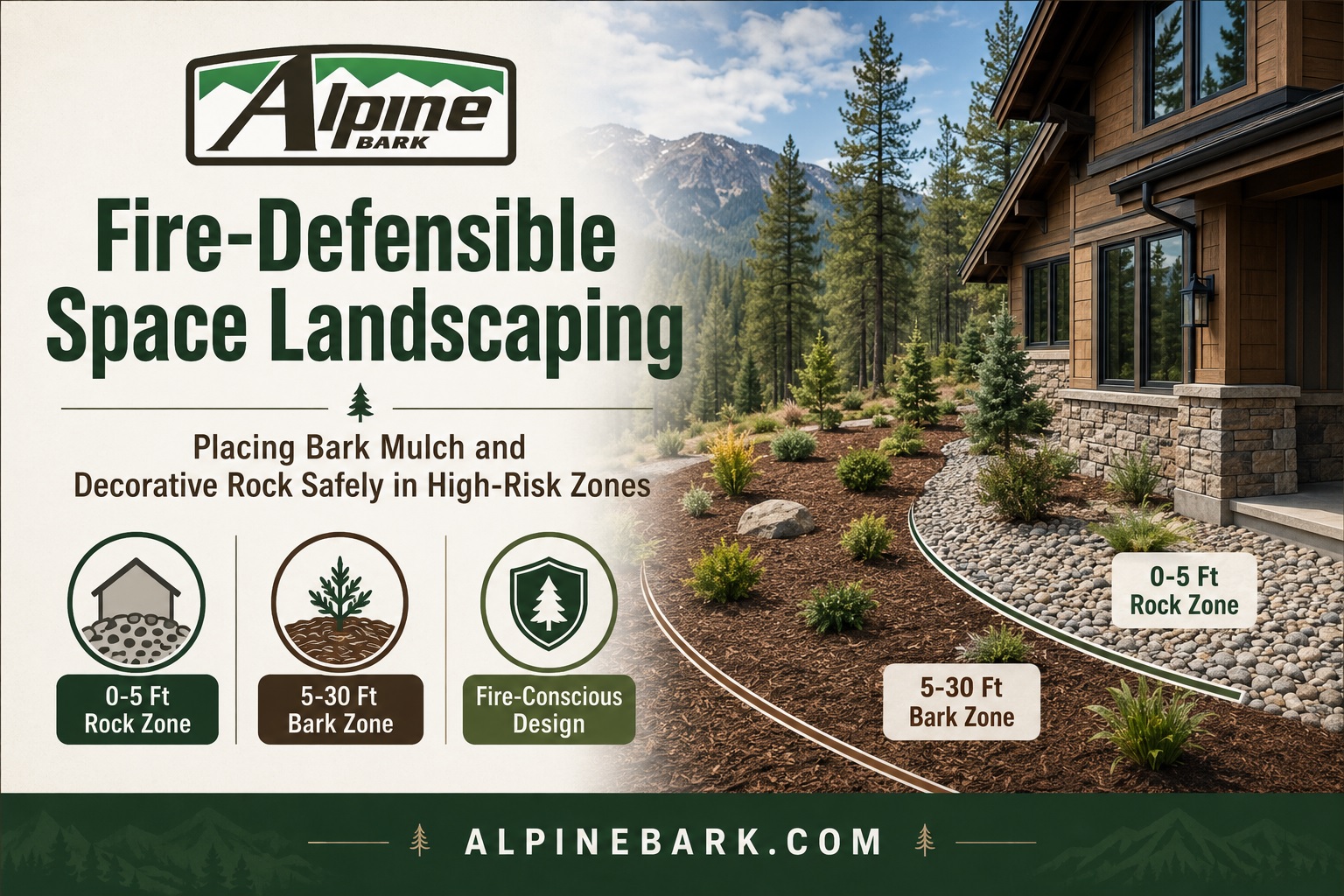
Bark mulch should not be installed within the first five feet of a home in a wildfire-prone area. Idaho Firewise identifies this immediate zone as a noncombustible area and recommends gravel or rock mulch rather than combustible wood products. From 5 to 30 feet away, bark can be used more selectively in maintained planting beds when it is kept hydrated, separated by rock or hardscape breaks, and cleared of dry needles, leaves, and dead vegetation. No landscape is fireproof, but separating fuels can reduce the chance that windblown embers create a continuous path toward the structure.
For homeowners near pine forests in Coeur d’Alene, Hayden, Spokane Valley, and Liberty Lake, the question is not simply whether bark mulch is a fire hazard. The more useful question is where bark belongs and where a noncombustible material should replace it.
Is Bark Mulch a Fire Hazard Near a House?
Organic mulch can ignite, smolder, and produce flames when it becomes dry. University of Idaho research guidance states that organic mulches should not be used next to structures, while gravel, brick, concrete, and pavers provide greater fire resistance in those areas. The same guidance warns that smoldering mulch may remain difficult to detect before flaring into visible flames.
This does not mean every bark bed across the property must be removed. It means the landscape should be divided into zones based on distance from the house and the consequences of ignition.
Defensible Space Mulch Placement by Zone
| Landscape Zone | Recommended Ground Cover | Main Objective |
|---|---|---|
| 0 to 5 feet | Crushed gravel, river rock, decorative stone, pavers, or concrete | Remove combustible fuel beside the structure |
| 5 to 30 feet | Separated bark beds, rock bands, maintained lawn, and hardscaping | Reduce fuel continuity and keep vegetation healthy |
| 30 to 100 feet or more | Thinned and maintained vegetation | Slow fire movement before it approaches the home |
Idaho Firewise recommends at least 100 feet of defensible space on level sites, with greater distances potentially needed on slopes. Property boundaries and local conditions may limit the available space, but the first five feet remain the most critical landscape zone.
Zone 1: Build a Noncombustible Border From 0 to 5 Feet
A decorative rock border around the home foundation should extend at least five feet from the furthest attached exterior point, including decks and similar attachments. That border should remain free of bark, pine needles, dead leaves, wood fencing, firewood, and other materials that can ignite from embers.
Suitable materials include:
- 3/4-inch crushed gravel
- Pea gravel
- River rock
- Montana Rainbow stone
- Concrete or stone pavers
- Brick or masonry walkways
Our sand and gravel products include 3/4-inch crushed gravel that compacts into a stable surface while supporting drainage. Rounded river rock or Montana Rainbow can create a more decorative foundation border. Our guide to Montana Rainbow and river rock explains how rounded stone can also support drainage features.
Rock alone does not eliminate maintenance. Pine needles, leaves, cones, and twigs can collect between stones and create a combustible layer over a noncombustible surface. University of Idaho guidance recommends removing this accumulated debris at least annually. More frequent cleaning may be needed during dry and windy periods.
Zone 2: Use Bark Strategically From 5 to 30 Feet
The 5-to-30-foot intermediate zone can still contain attractive garden beds, shrubs, lawns, and trees. The goal is to prevent vegetation and mulch from forming an uninterrupted fuel path back to the home.
Idaho Firewise recommends keeping this area lean, clean, and green. Plants should be arranged in small clusters, tree canopies should remain away from the structure, and hardscapes or dry creek beds can be used to interrupt vegetation.
When installing organic bark mulch in this zone, we recommend:
- Keeping every bark bed outside the five-foot rock perimeter
- Limiting bark to defined planting islands rather than one continuous field
- Breaking beds apart with gravel paths, stone edging, lawn, or patios
- Applying approximately two to three inches around established plants
- Keeping bark away from tree trunks and woody stems
- Using drip irrigation to maintain plant and soil moisture
- Removing dry needles, leaves, dead plants, and windblown debris
Oregon State University advises avoiding large continuous areas of bark in the home ignition zone and recommends keeping wood mulch moist and separating it with nonflammable hardscape or irrigated lawn.
A Practical Rock-and-Bark Layout
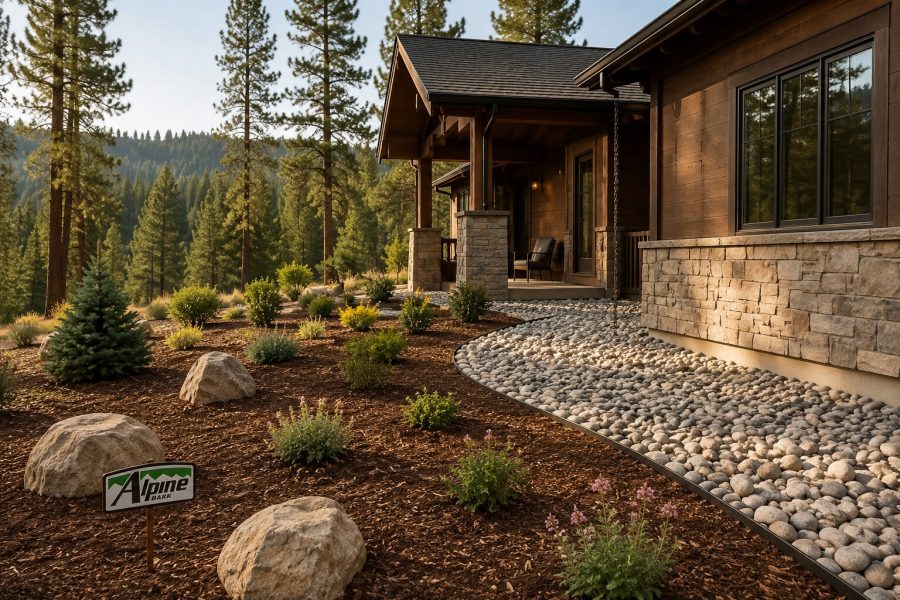
A balanced fire-conscious landscape can begin with a five-foot band of crushed gravel or decorative rock around the house. A paver walkway or stone border can then create a clear transition into bark-covered planting beds farther from the structure.
Within the bark area, separate shrubs into small groups and leave open space between plantings. Use additional rock strips around decks, fences, propane equipment, and other vulnerable features. This layout preserves the moisture-retention and weed-suppression benefits of bark without placing combustible mulch directly against the building.
Alpine Bark Blowing supplies bark, crushed gravel, river rock, and decorative landscape materials throughout North Idaho and Eastern Washington. We help property owners combine materials based on distance from the structure, drainage needs, planting conditions, and seasonal maintenance rather than treating the entire yard as one continuous mulch bed.