
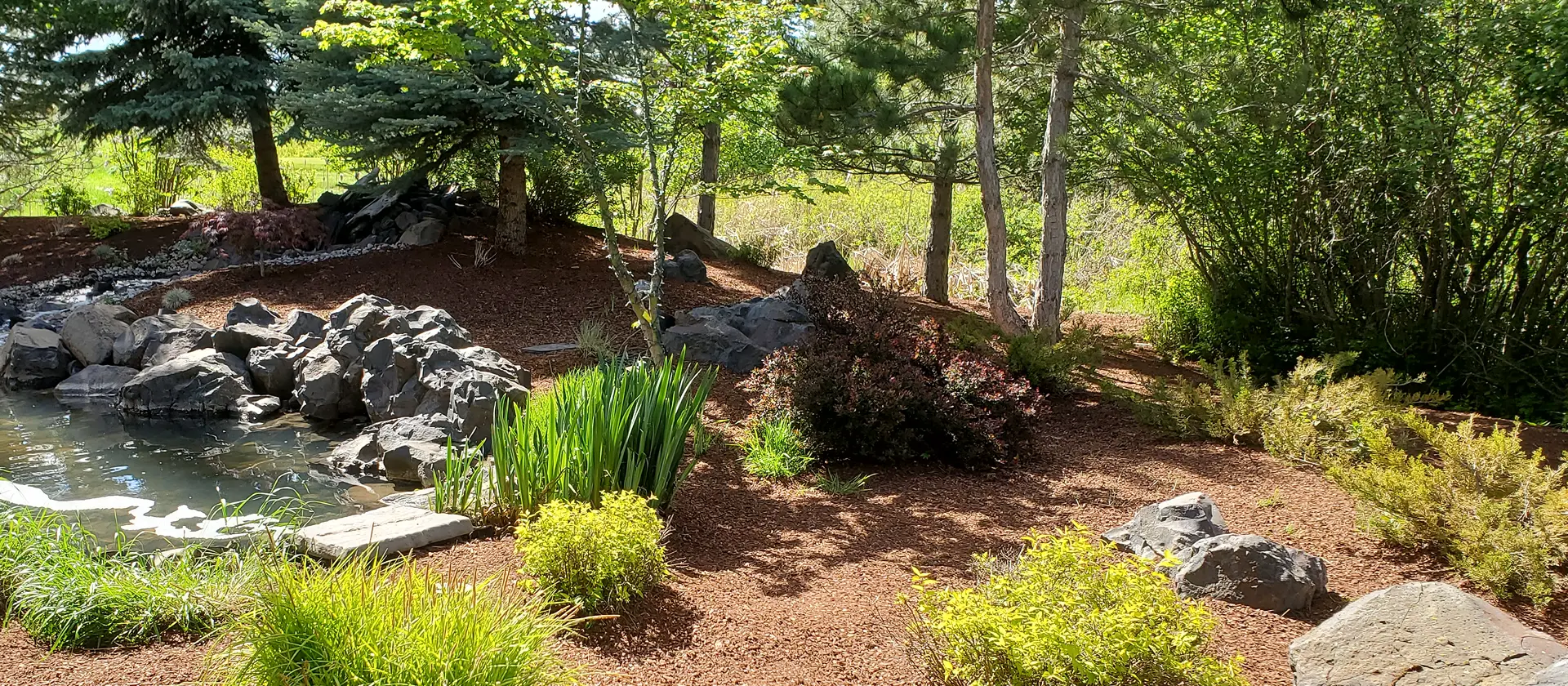
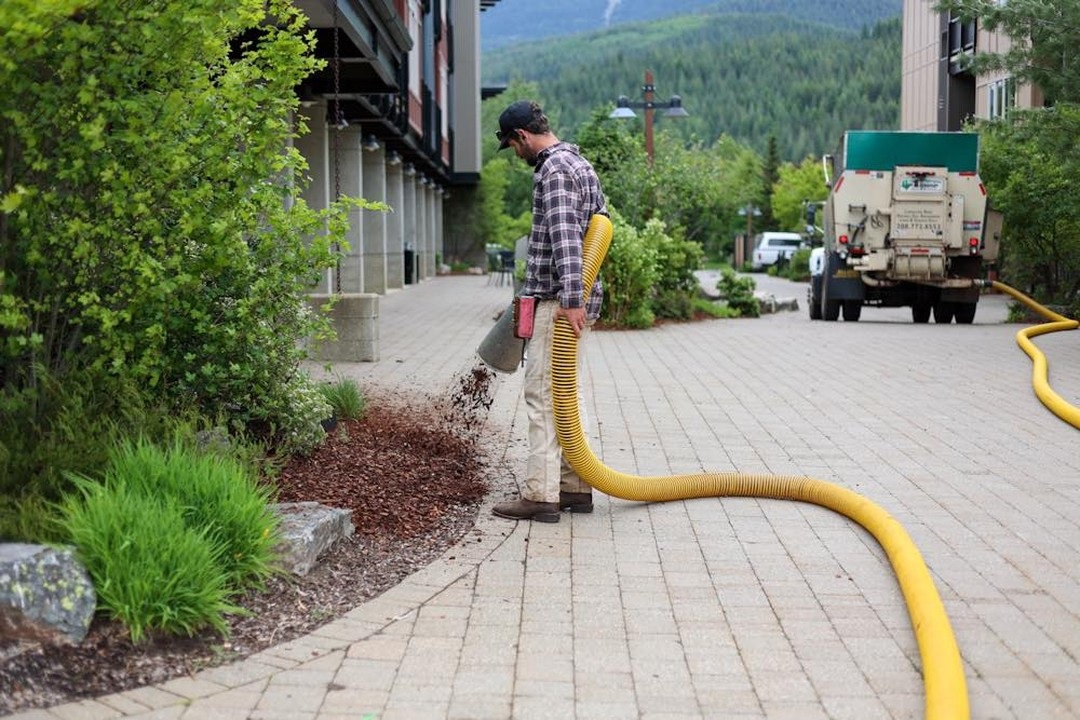
For property owners across Spokane, Coeur d’Alene, Post Falls, Hayden, Liberty Lake, Spokane Valley, Sandpoint, Mead, Colbert, Deer Park, Airway Heights, and nearby Inland Northwest communities, winter plant protection starts at ground level. At Alpine Bark Blowing, our team uses bark mulch insulation for winter to help shrubs, trees, perennials, and commercial landscape beds handle freezing nights, thaw cycles, wind exposure, and root-zone stress.
Winter damage is not always caused by one deep freeze. Many plants struggle because the soil freezes, thaws, expands, contracts, and moves around the roots. That movement can lift shallow-rooted plants out of the soil, expose feeder roots, dry out crowns, and weaken expensive landscape installations before spring growth begins.
Bark Mulch Works Like a Thermal Blanket
Bark mulch does not heat the soil like an electric blanket. Its value comes from slowing temperature swings. A properly applied bark layer helps trap stable ground temperature, reduce moisture loss, and shield the soil surface from sudden winter changes.
That matters in the Pacific Northwest and Inland Northwest because winter conditions can shift quickly. A bed can thaw during a mild afternoon, refreeze overnight, then repeat that pattern for weeks. Without mulch, roots experience more direct exposure to those swings.
How Deep Should Mulch Be for Winter?
For most established shrub beds, tree rings, and perennial borders, a 3-inch bark mulch layer is a strong working depth. It is deep enough to insulate the root zone and suppress winter weeds without burying plant crowns or trapping excessive moisture against stems.
Use this quick guide:
| Landscape Area | Recommended Winter Bark Depth |
|---|---|
| Established shrub beds | 3 inches |
| Newly planted shrubs | 3 to 4 inches |
| Tree rings | 3 to 4 inches |
| Perennial beds | 2 to 3 inches |
| Thin refresh over existing bark | 1 to 2 inches |
| Wind-exposed commercial beds | 3 inches or more as needed |
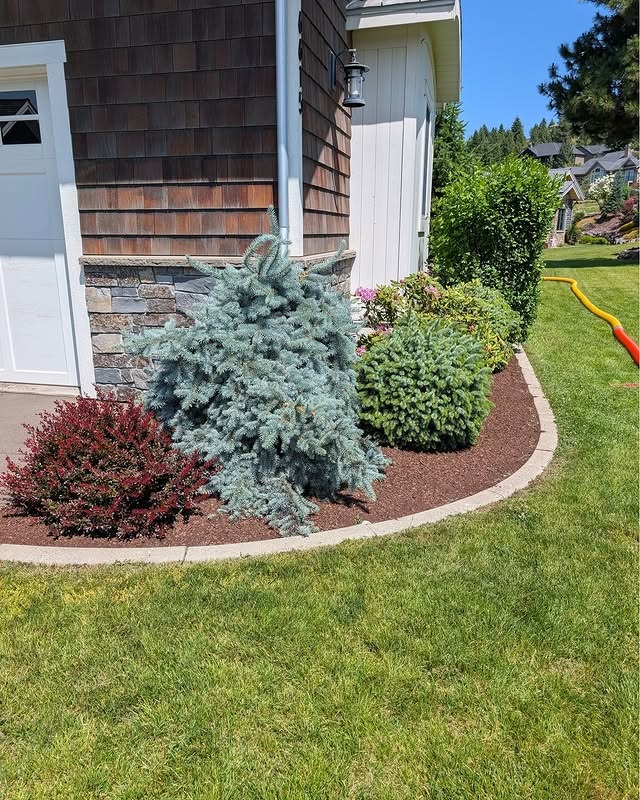
Keep mulch pulled back from trunks, stems, and crowns. The goal is a donut shape around plants, not a volcano pile against the base.
Why 3 Inches Matters
A 3-inch bark layer creates enough mass to slow evaporation and buffer temperature movement. It also helps hold fall moisture in the root zone before the soil locks into winter conditions.
For most properties, that depth provides the best balance of protection, appearance, and material efficiency. At 3 inches deep, 1 cubic yard of bark covers about 108 square feet. That means a 1,080 square foot bed area needs roughly 10 cubic yards before adding extra for settling, bed edges, or uneven grades.
Use Alpine Bark’s yardage calculator to estimate material volume before scheduling delivery or blown application.
Preventing Frost Heaving in Plant Beds
Frost heaving happens when freezing soil expands and pushes plants or roots upward. When the soil thaws, the plant may not settle back into place correctly. Over time, roots can become exposed to cold air and drying wind.
This is especially risky for:
- Newly planted shrubs
- Perennials with shallow crowns
- Young trees
- Recently divided plants
- Beds with exposed soil
- Windy slopes
- Properties with clay or poorly draining soil
A bark mulch layer helps stabilize soil temperature and reduce the sharp freeze-thaw movement that causes heaving.
When to Apply Bark Mulch for Winter
Late fall is usually the best timing. Wait until plants begin dormancy and the soil has cooled, but do not wait until beds are frozen solid. For most Spokane and Coeur d’Alene properties, that means planning bark installation before hard winter weather settles in.
Before applying mulch:
- Remove weeds and loose debris
- Cut back perennials as needed
- Water dry soil before freeze season
- Pull soil back around exposed roots
- Apply bark evenly at the right depth
- Keep mulch away from stems and trunks
For large properties, slopes, commercial beds, and difficult access areas, bark blowing creates even coverage faster than hand spreading.
Why Blown Bark Beats Hand Spreading for Winter Prep
Hand spreading can leave thin spots, heavy piles, and uneven protection across bed edges. Blown bark allows cleaner control across large beds, slopes, berms, tree rings, and commercial landscapes.
Alpine Bark’s equipment can place material efficiently around shrubs, landscape borders, playground edges, apartment complexes, HOA entries, and larger commercial properties. For challenging access, read How Far Can a Bark Blower Reach?.
Choosing Bark for Bulk Landscape Supply Spokane/Coeur d’Alene Projects
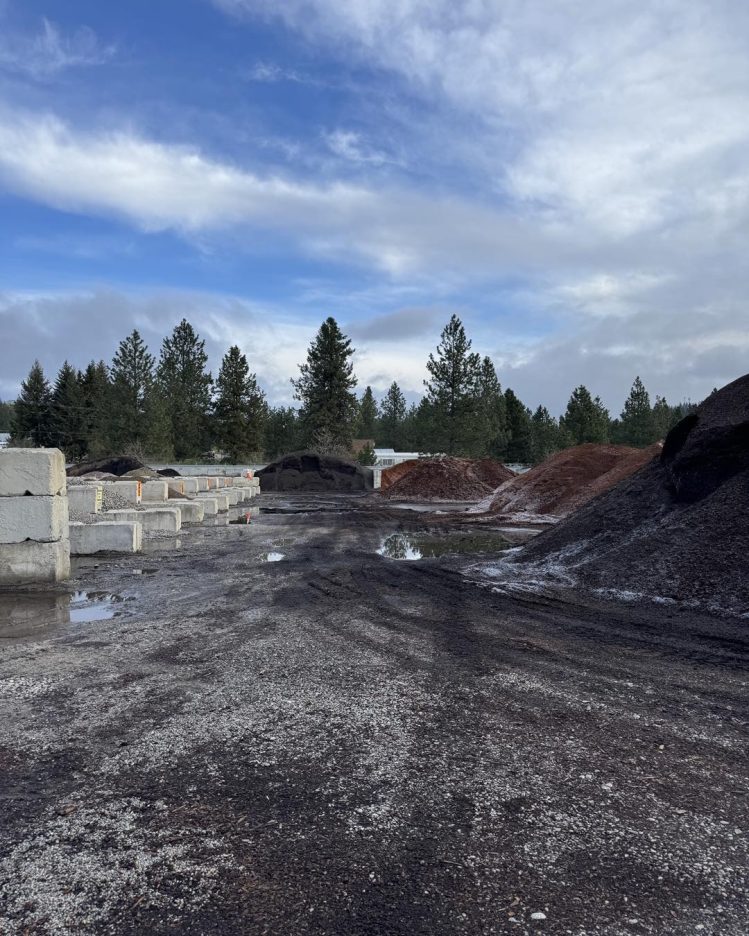
For winter insulation, bark mulch should be clean, consistent, and appropriate for the site. Coarser bark works well in long-term shrub beds and commercial landscapes because it stays in place better and breaks down more slowly than fine material.
Alpine Bark supports bulk landscape supply Spokane and Coeur d’Alene needs with bark mulch services for residential, commercial, and contractor projects. For product planning, browse Alpine Bark products or review services for delivery and application support.
For summer moisture planning, pair this guide with Fighting the Dry Season: Using Bark for Maximum Soil Moisture Retention.
Protect the Roots Before Winter Does the Damage
Healthy spring growth starts with protected winter roots. A 3-inch bark mulch layer can help stabilize soil temperature, hold moisture, reduce frost heaving, and protect valuable shrubs and perennials from freeze-thaw stress.
Alpine Bark Blowing helps homeowners, contractors, HOAs, and commercial property owners across Spokane, Coeur d’Alene, Post Falls, Hayden, Liberty Lake, and nearby communities plan bark mulch volume, delivery, and professional blown installation. Start with the yardage calculator or request help through Alpine Bark Blowing before winter arrives.
FAQ
How to winterize plants with bark mulch?
Clean the bed, water dry soil, apply bark mulch at the right depth, and keep mulch pulled away from stems and trunks. Most shrub and tree beds benefit from about 3 inches.
How deep should mulch be for winter?
A 3-inch layer works well for many established beds. Newly planted shrubs and trees may need 3 to 4 inches over the root zone, with mulch pulled away from the trunk.
Does bark mulch insulation for winter prevent frost heaving?
It helps reduce frost heaving by moderating soil temperature swings and protecting the root zone from repeated freeze-thaw movement.
How much bark mulch is needed at 3 inches deep?
One cubic yard covers about 108 square feet at 3 inches deep. Measure the bed area, divide by 108, then add a small buffer for uneven areas.