Every North Idaho summer, we see the same problem show up in yards across Hauser, Coeur d’Alene, Post Falls, Hayden, and the surrounding areas: the soil dries out faster than homeowners expect.
Plants start to wilt. Shrubs look stressed. Garden beds need more frequent watering. Bare soil turns dusty, crusted, and hard. By July, many landscapes are fighting heat, wind, and dry conditions all at once.
That is why I look at bark mulch as more than a finishing touch. For our climate, bark is one of the most practical tools for soil moisture retention, root protection, and long-term garden water conservation.
At Alpine Bark Blowing, we install premium bark with professional blower equipment, which gives homeowners a clean, even layer without heavy wheelbarrow traffic, messy piles, or damage to lawns and plantings. Our bark blowing service uses pneumatic equipment with more than 250 feet of reach from the truck, allowing precise installation in beds, slopes, tight spaces, and large properties.
Why Bark Matters During the North Idaho Dry Season
When soil is left exposed, sunlight and wind pull moisture from the surface. Water from irrigation or rainfall can evaporate quickly before roots have enough time to use it.
Bark mulch helps by acting like a protective blanket over the soil.
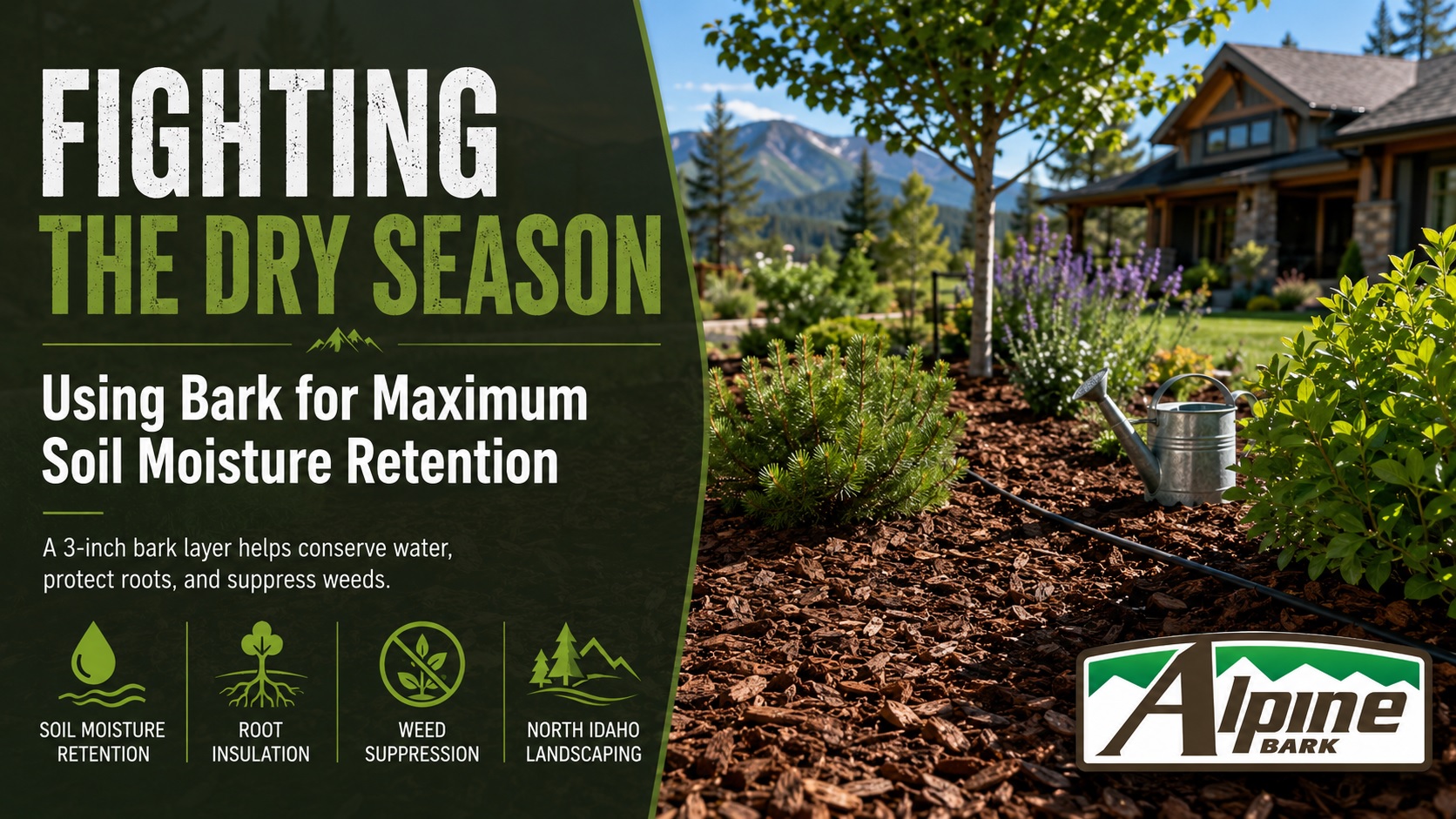
A properly installed 3-inch layer of bark can help:
- Reduce surface evaporation
- Keep soil temperatures more stable
- Protect shallow roots from heat stress
- Reduce weed competition
- Improve water efficiency
- Support cleaner, healthier planting beds
- Add organic matter as it breaks down
University extension resources consistently explain that mulch conserves soil moisture by reducing evaporative water loss from bare soil and limiting weed competition for available water.
The 3-Inch Rule for Soil Moisture Retention
For most North Idaho landscape beds, we recommend aiming for about 3 inches of bark.
That depth is important. Too little bark may look good for a few weeks, but it will not provide enough insulation or weed suppression. Too much bark can smother plant crowns, hold excess moisture against stems, or create maintenance issues.
A 3-inch layer gives you a strong balance of:
- Moisture protection
- Weed suppression
- Temperature control
- Visual coverage
- Long-term performance
Colorado State University’s Landscape for Life guidance recommends at least 3 inches of mulch to help prevent evaporation from the soil surface. Washington State University guidance also recommends applying mulches 2 to 4 inches deep over clean, weed-free soil.
Bark Works Like an Insulator for Roots
In North Idaho, landscapes deal with both dry summer heat and cold winter conditions. Bark helps buffer both extremes.
During the dry season, bark shades the soil and reduces heat buildup around roots. In colder months, it helps protect root zones from temperature swings and freeze-thaw stress.
That matters for:
- Shrubs
- Perennials
- Trees
- Foundation beds
- Sloped plantings
- Lake-area landscapes
- Commercial properties
- Newly installed beds
Bark Reduces Water Waste From Weeds
Weeds are not just unattractive. They steal water.
Every weed growing in your planting bed competes with your shrubs, flowers, trees, and perennials for moisture. That means part of your irrigation budget may be feeding plants you do not even want.
A quality weed suppression mulch blocks sunlight from reaching weed seeds and makes it harder for new weeds to establish. Bark is especially useful because it creates a natural barrier while still allowing water and air to move through when applied correctly.
Alpine Bark describes bark mulch as a natural weed suppression tool that blocks sunlight from reaching weed seeds and reduces weed growth without relying on synthetic chemicals.
Why Bark Is a Smart Choice for Drought-Tolerant Landscaping
Drought-tolerant landscaping does not mean a dry, lifeless yard. It means designing a landscape that uses water wisely.
Bark supports that goal because it helps every watering work harder. Instead of moisture disappearing from bare soil, the bark layer slows evaporation and keeps the root zone more consistent.
For North Idaho homeowners, that can mean:
- Less plant stress during July and August
- Better performance from shrubs and perennials
- More efficient drip irrigation
- Fewer muddy spots after watering
- Less time spent hand-watering dry beds
- A cleaner, more finished landscape
If you are planning a water-wise refresh, we recommend pairing bark with thoughtful plant selection, drip irrigation, soil improvement, and correct bed preparation.
You can explore our Bark, Soil and Compost, Decorative Rock, and Bark Blowing services to build a landscape that looks finished and performs through the dry season.
Where Bark Makes the Biggest Difference
Bark is useful almost anywhere you have exposed soil, but we especially recommend it in areas that dry out quickly.
Best places to use bark include:
- Foundation beds
- Shrub borders
- Tree rings
- Perennial beds
- Sloped areas
- Commercial landscapes
- Lake properties
- Roadside plantings
- Wind-exposed yards
- Newly installed landscapes
For steep or hard-to-reach spaces, bark blowing is a major advantage. Our equipment allows us to install bark cleanly and evenly without dragging wheelbarrows through turf, compacting soil, or damaging existing plants.
How to Apply Bark for Best Results
For maximum moisture retention, we recommend this process:
- Pull existing weeds before installation.
- Water dry soil before adding bark.
- Apply bark at about 3 inches deep.
- Keep bark a few inches away from tree trunks and plant stems.
- Maintain a clean edge along beds and walkways.
- Refresh bark as it breaks down or thins.
- Check irrigation after installation because beds may stay moist longer.
In North Idaho, spring is one of the best times to apply bark because it helps lock in moisture before the July heat arrives. Alpine Bark’s Post Falls and Hayden pages both note that late spring, especially May, is an ideal window for applying bark before dry summer conditions intensify.
Bark Helps Your Landscape Fight Back
The North Idaho dry season can be hard on landscapes, but bare soil makes the problem worse.
A 3-inch layer of bark helps protect the soil, insulate roots, reduce weed pressure, and make watering more efficient. It is one of the simplest ways to support garden water conservation while keeping your property clean, healthy, and finished.
At Alpine Bark Blowing, we make the process easier with premium bark products, professional bark blowing, delivery, pickup, and local expertise across the Rathdrum Prairie and Spokane Valley corridor. From Hauser to Coeur d’Alene, Post Falls, Hayden, Liberty Lake, and Greenacres, we help homeowners and contractors get bark installed cleanly and efficiently.
Ready to protect your beds before the dry season hits? Visit our Bark Blowing, Bark Mulch, Delivery and Retail, or Contact pages to get started.
Bark FAQs
How does bark help with soil moisture retention?
Bark covers bare soil, reduces surface evaporation, shades the root zone, and helps keep moisture available longer after watering or rainfall.
How deep should bark be for water conservation?
A 3-inch layer is a strong target for most landscape beds. It helps reduce evaporation, suppress weeds, and insulate roots without overloading plant stems.
Is bark good for drought-tolerant landscaping?
Yes. Bark is a practical part of drought-tolerant landscaping because it helps reduce water loss and supports more efficient irrigation.
Does bark mulch help suppress weeds?
Yes. Bark works as a weed suppression mulch by blocking sunlight from reaching weed seeds and reducing competition for water and nutrients.
When should I apply bark in North Idaho?
Late spring is a great time because it helps lock in moisture before summer heat. Fall is also useful for root insulation before winter.
Does Alpine Bark Blowing install bark in Coeur d’Alene and Post Falls?
Yes. Alpine Bark Blowing provides bark mulch delivery and professional blowing services across the Rathdrum Prairie and Spokane Valley corridor, including Coeur d’Alene, Post Falls, Hayden, Liberty Lake, and Greenacres.