
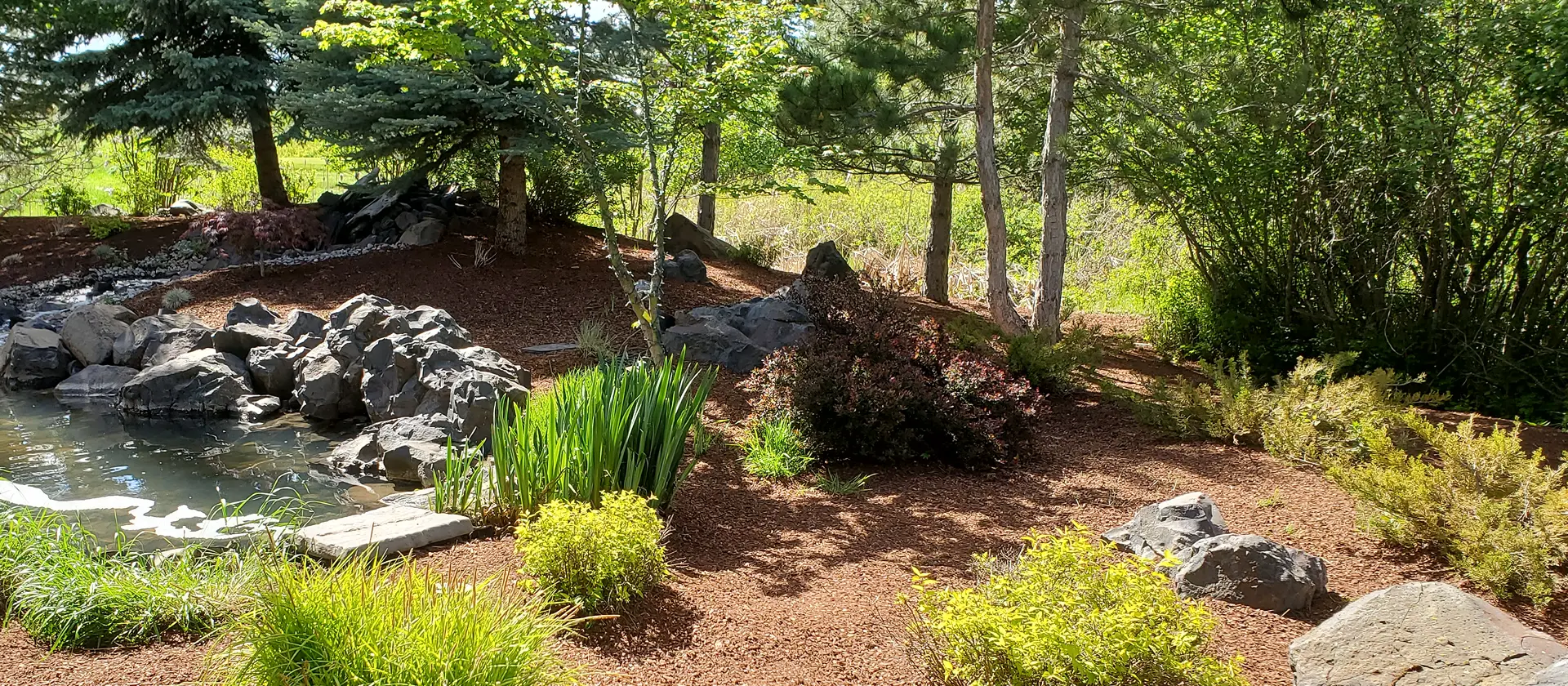
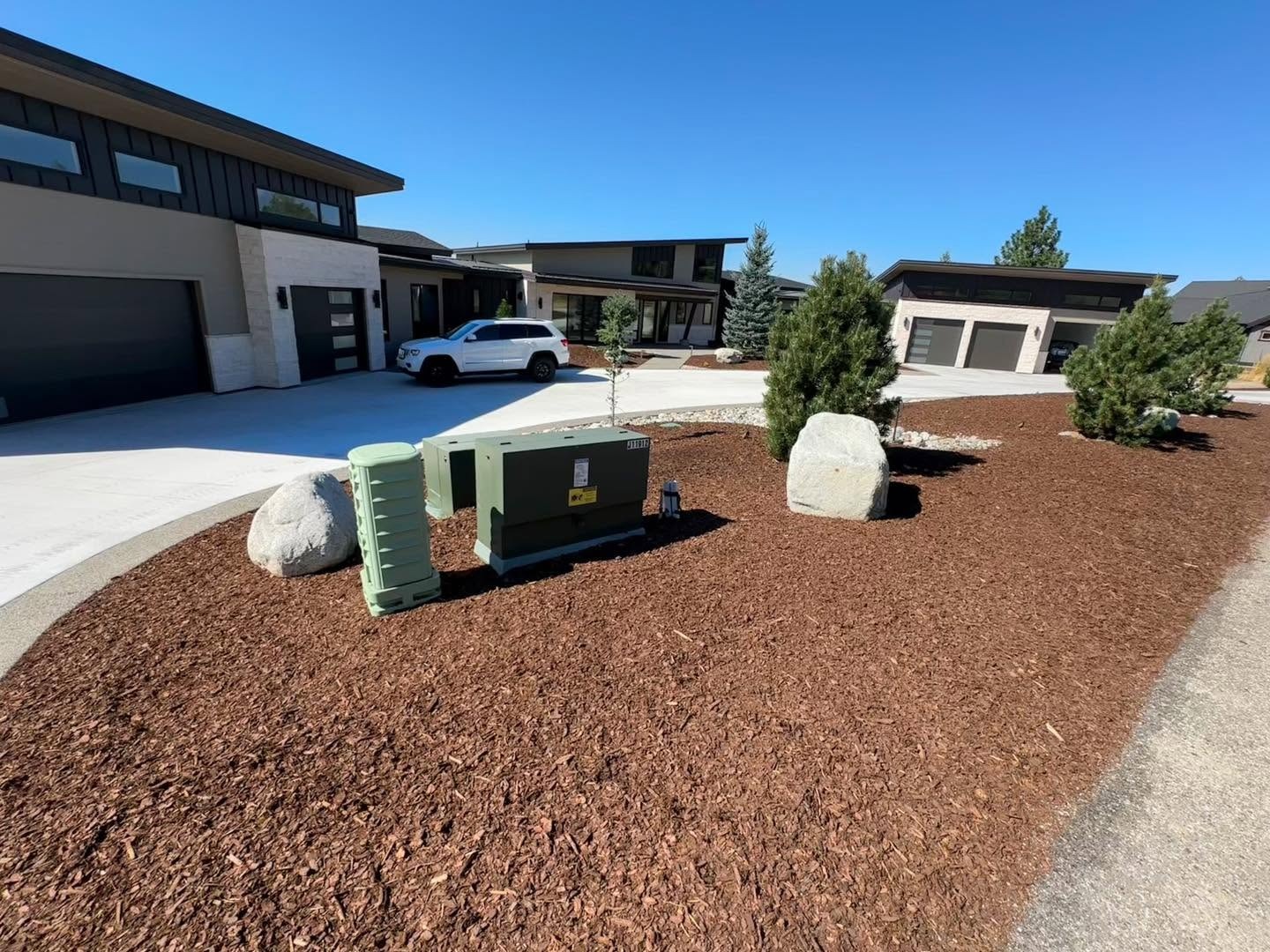
Property owners across North Idaho want one thing from their landscape beds: fewer weeds without creating a future mess. That is why one question comes up so often: should you use weed barrier under mulch?
At Alpine Bark Blowing, our answer is honest. Weed fabric can look like a quick fix, but it is rarely the best long-term solution for healthy planting beds. A thick, properly installed layer of fresh bark mulch often gives better weed suppression, better soil breathability, and better future maintenance without trapping plastic under the landscape.
For homeowners and contractors in Hauser, Coeur d’Alene, Post Falls, Hayden, Sandpoint, Spirit Lake, Spokane Valley, Liberty Lake, and nearby areas, the smarter choice usually starts with the right bark depth, the right product, and a clean installation process.
Skip the Plastic in Most Planting Beds
Landscape fabric has a place under certain hardscape materials, gravel areas, or temporary weed-smothering projects. But under bark mulch in active planting beds, it often creates more trouble than it solves.
University of Illinois Extension explains that landscape fabric can suppress weeds for a short time, but over the years it may restrict air and water movement, collect sediment in its pores, and make soil beneath it less healthy.
That matches what our team sees in real yards. Fabric may look clean during the first season, but later it becomes a tangled layer of plastic, roots, soil, and weeds.
Pros and Cons of Landscape Fabric
Landscape fabric is popular because it feels like a permanent weed-control product. The reality is more mixed.
| Landscape Fabric Pros | Landscape Fabric Cons |
|---|---|
| Can reduce the first flush of weeds | Does not stop weed seeds from landing on top |
| Can help separate gravel from soil | Can restrict air and water movement |
| Useful under some rock or hardscape areas | Makes future planting harder |
| May work temporarily in low-planting zones | Can clog, tear, shift, and surface over time |
| Looks controlled at first | Can reduce organic matter reaching the soil |
The biggest problem is simple: weeds do not only come from below. Wind, birds, irrigation runoff, foot traffic, and nearby plants drop new seeds into the mulch layer every year. Illinois Extension notes that weed seeds can collect on top of fabric and support new weed growth after just one season.
Why Weed Fabric Can Hurt Soil Health
Healthy soil needs air, water, organic matter, microbes, fungi, insects, and earthworms. A plastic or synthetic layer can interrupt that natural cycle.
When bark mulch sits directly on soil, it slowly breaks down and adds organic material. That process improves soil structure over time and supports the living biology plants depend on. When fabric sits between the bark and the soil, much of that natural benefit is blocked.
Illinois Extension warns that fabric can prevent earthworms, insects, and beneficial fungi from moving through soil layers and breaking down organic matter. It also notes that old fabric can leave soil structure deteriorated because organic matter has not been added back into the soil.
For North Idaho landscapes, that matters. Hot, dry summers and cold winters already stress plant roots. Soil that can breathe, absorb water, and receive organic matter gives shrubs, trees, and perennials a better chance to thrive.
The Myth of Permanent Weed Control
Homeowners often ask how to stop weeds in mulch beds permanently. The honest answer is that no mulch, fabric, spray, or product permanently stops weeds forever.
A better goal is long-term suppression.
Weeds need light, open soil, moisture, and space. A dense layer of bark mulch limits sunlight at the soil surface, makes seed germination harder, and creates a cleaner bed that is easier to maintain. USDA notes that mulch helps suppress weeds, conserve water, protect soil from erosion, and moderate soil temperature.
That is the strategy: reduce weed pressure naturally, then refresh the mulch before it breaks down too far.
Why Thick Bark Mulch Works Better
Fresh bark mulch works as a natural weed barrier because it blocks light. Weed seeds near the soil surface struggle to germinate when covered by a consistent bark layer.
Bark mulch acts as a natural weed barrier, helps retain moisture, insulates roots during winter freezes, and reduces soil loss and movement. It also notes that 3 inches of bark can provide weed control without the extra effort of weed fabric.
For most North Idaho beds, a 3-to-4-inch bark layer is the sweet spot:
- Thick enough to block sunlight from weed seeds
- Breathable enough to let water and air move
- Natural enough to break down into the soil
- Clean enough to refresh every few seasons
- Heavy enough to reduce erosion on many beds
- Flexible enough for future planting changes
Best Mulch to Prevent Weeds
The best mulch to prevent weeds depends on the site, but bark mulch is usually one of the best all-around choices for ornamental beds, shrub beds, commercial landscapes, and residential borders.
A good weed-control mulch should:
- Knit together enough to stay in place
- Allow water to reach plant roots
- Shade the soil surface
- Improve the bed as it breaks down
- Look natural in North Idaho landscapes
- Be easy to refresh when needed
Alpine Bark produces premium bark products in-house and provides bark blowing, delivery, pickup, and wholesale supply for homeowners, contractors, and commercial projects.
For planting beds, start with bark mulch. For play areas or walking surfaces, compare wood chips. For planting improvements, pair bark with soil & compost. For drainage edges or non-planted areas, sand & gravel or decorative rock may be the better fit.
When Weed Fabric Might Still Make Sense
This is not a full ban on fabric. It can still make sense in limited areas.
Consider fabric under:
- Gravel walkways
- Decorative rock zones with no planting
- Utility strips
- Dry storage areas
- Temporary smothering projects
- Commercial sites where planting changes are unlikely
Avoid fabric under:
- Perennial beds
- Shrub borders
- Vegetable gardens
- Flower beds
- Areas that need regular planting
- Beds where soil health matters
- Spaces where drip irrigation needs direct root-zone access
The more alive the bed is, the less useful synthetic fabric becomes.
How Professional Bark Blowing Helps Weed Control
A thin, uneven mulch layer leaves gaps for weed seeds. A thick, consistent bark layer performs better.
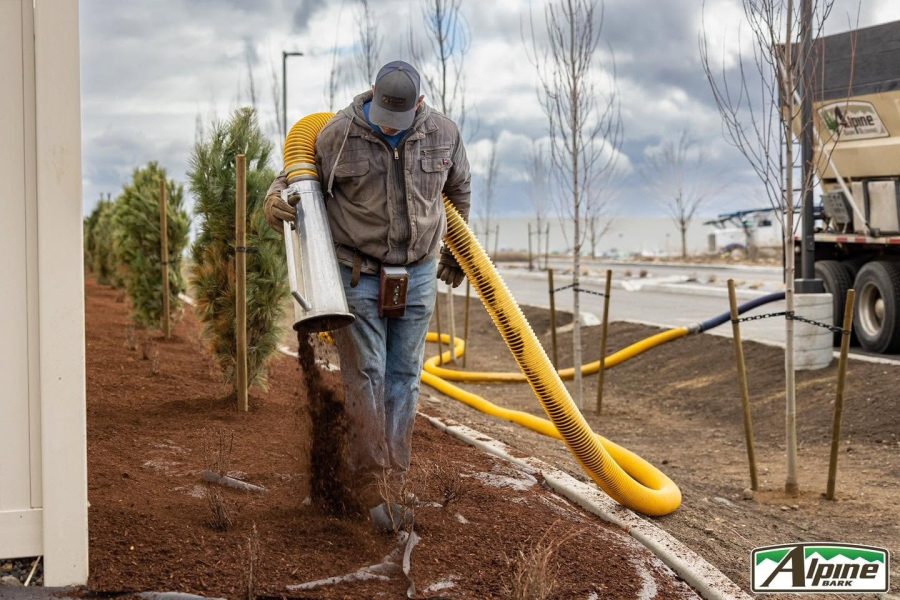
That is where Bark Blowing helps. Alpine Bark’s process uses blower equipment to apply product evenly, reduce driveway piles, limit wheelbarrow labor, reach difficult areas, and clean up overspray from sidewalks, patios, and decks.
Professional bark blowing helps create:
- More even depth across the bed
- Better coverage around shrubs and trees
- Cleaner edges
- Less damage to lawns and plantings
- Faster installation on large properties
- Better access to steep slopes and hard-to-reach areas
For homeowners trying to reduce weeding, the evenness matters as much as the material.
The 3-to-4-Inch Mulch Rule
A shallow dusting of bark looks nice for a few weeks, but it will not suppress weeds well. A thick layer performs better.
Use this simple guide:
| Mulch Depth | Best Use |
|---|---|
| 1 inch | Light refresh only |
| 2 inches | Existing beds with minimal weed pressure |
| 3 inches | Strong weed suppression for most bark beds |
| 4 inches | New beds, bare soil, or higher weed pressure |
| 5 inches or more | Use carefully to avoid burying plant crowns |
Keep bark pulled back from tree trunks, shrub stems, siding, and wood structures. More mulch is not always better around plant bases.
What About Cardboard Under Mulch?
Cardboard is often suggested as a fabric alternative. It can work for temporary smothering, especially when converting weedy areas into new beds. But it should be used carefully.
Plain, uncoated cardboard can break down over time. It should be cleared of tape, stickers, staples, and glossy coatings. It should also be kept away from plant crowns and cut open around root zones so water can reach the soil.
For many established beds, thick bark mulch alone is cleaner and simpler.
North Idaho Soil Needs to Breathe
North Idaho landscapes deal with real seasonal pressure. Summer heat dries out beds. Winter freezes stress roots. Sloped properties can lose soil during rain and snowmelt. Weed pressure changes as mulch breaks down.
Organic bark mulch supports the soil better than plastic because it works with those conditions instead of sealing them off.
Mulch helps:
- Shade soil during hot weather
- Reduce evaporation
- Insulate roots during cold weather
- Limit erosion on exposed beds
- Suppress weed germination
- Improve the look of the landscape
- Add organic matter over time
University of Illinois Extension notes that organic mulch such as wood chips and bark decomposes over time and that coarser materials allow better air and water exchange.
How to Stop Weeds in Mulch Beds Long Term
Permanent weed elimination is not realistic, but a strong system can dramatically reduce weeding.
Use this approach:
- Remove existing weeds before installing fresh bark.
- Pull deep-rooted weeds fully when possible.
- Apply bark at 3 to 4 inches for better light blockage.
- Keep mulch even across the bed.
- Avoid plastic fabric under planted areas.
- Refresh bark before it decomposes too thin.
- Water plants correctly so weeds are not encouraged by overspray.
- Use edging to keep lawn from creeping into beds.
- Spot-pull young weeds before they seed.
- Use the Yardage Calculator to order the right depth.
This is the practical path to low-weed beds without damaging soil health.
The Better Choice: Let the Soil Work
The best landscape beds are not just covered. They are alive underneath.
Plastic fabric tries to freeze the landscape in place, but real yards change. Plants grow. Roots spread. Bark decomposes. Soil improves. Beds get refreshed. New shrubs, perennials, and trees are added over time.
A dense layer of fresh bark mulch supports that cycle. It suppresses weeds, protects soil moisture, insulates roots, and slowly feeds the ground as it breaks down.
At Alpine Bark Blowing, our team helps homeowners and contractors choose the right mulch product, estimate the right quantity, and install it cleanly with professional blower equipment.
FAQs
Should you use weed barrier under mulch?
In most planting beds, weed barrier under mulch is not recommended for long-term soil health. A 3-inch layer of bark mulch can provide strong weed control while still allowing water, air, and organic matter to support the soil.
What are the pros and cons of landscape fabric?
Landscape fabric can suppress weeds for a short time and may work under gravel or rock. The downside is that it can clog, restrict water and air, collect weed seeds on top, make planting harder, and reduce organic matter reaching the soil.
How do you stop weeds in mulch beds permanently?
No mulch system stops weeds permanently. The best long-term approach is to remove existing weeds, apply 3 to 4 inches of bark mulch, maintain clean edges, refresh mulch as it breaks down, and pull new weeds before they seed.
What is the best mulch to prevent weeds?
Fresh bark mulch is one of the best mulch options for weed suppression in landscape beds because it blocks sunlight, protects soil moisture, breathes naturally, and improves the soil as it decomposes.
Is plastic weed barrier bad for soil?
Plastic weed barrier can block water, restrict air movement, trap moisture, and interrupt the natural breakdown of organic matter. In planted beds, this can lead to poor soil conditions over time.
Does Alpine Bark Blowing install mulch in North Idaho?
Yes. Alpine Bark Blowing provides bark blowing, delivery, pickup, and bulk landscape supply for Hauser, Coeur d’Alene, Post Falls, Hayden, Spirit Lake, Sandpoint, Spokane Valley, Liberty Lake, and surrounding areas.