
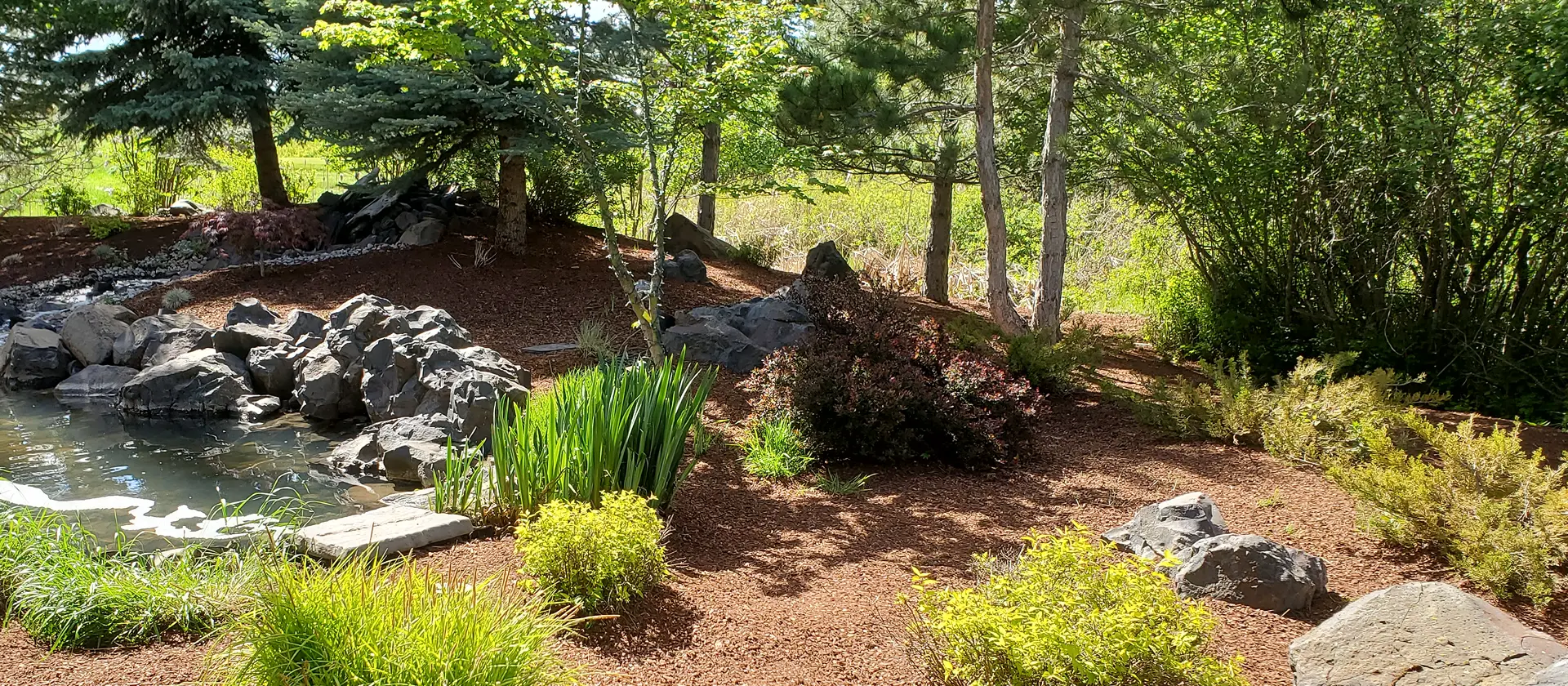
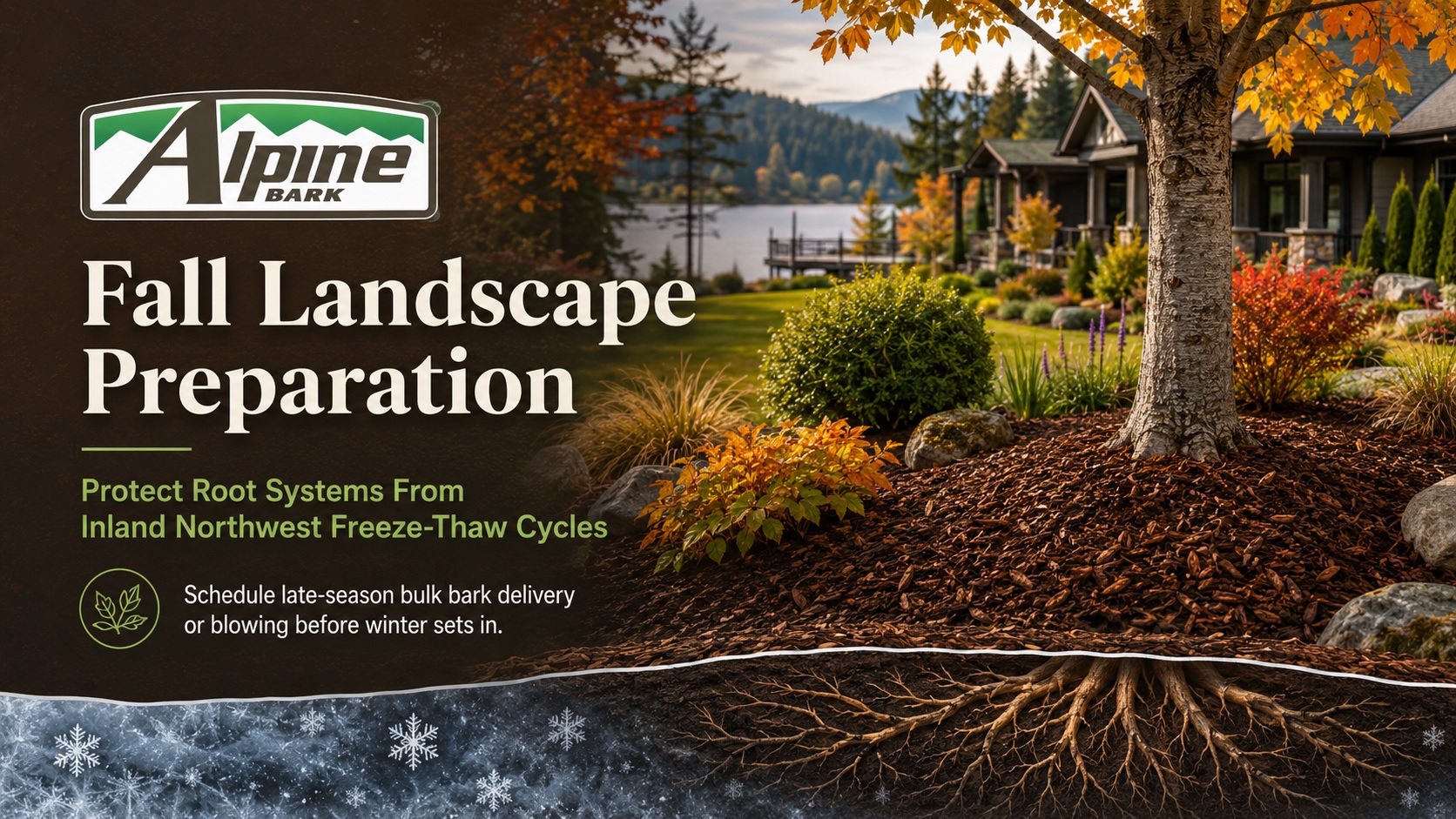
Prepare bark beds for winter by removing weeds and debris, watering trees and shrubs deeply before the soil freezes, and restoring the total bark mulch depth to about 2 to 3 inches. Bark moderates soil-temperature changes, conserves moisture, and reduces the repeated freezing and thawing that can expose or damage shallow roots. Keep mulch several inches away from trunks and woody stems. For sensitive perennials, apply the final protective layer after the ground has frozen lightly so the soil remains consistently cold instead of repeatedly thawing and refreezing.
Winter damage often begins below the soil surface. Trees, shrubs, and perennials may enter dormancy above ground while their roots remain vulnerable to dry soil, sudden temperature changes, and repeated freeze-thaw cycles.
At Alpine Bark Blowing, we help property owners across Spokane, Coeur d’Alene, Post Falls, Liberty Lake, and nearby communities prepare landscape beds with bulk bark delivery and professional installation.
How Mulch Protects Plant Roots From Frost Heaves
Frost heave occurs when soil repeatedly freezes and thaws. Expanding ice and shifting soil can push crowns and shallow roots upward, leaving them exposed to cold air and drying winds.
Organic mulch acts as insulation between the atmosphere and the soil. It reduces rapid temperature swings and helps the ground remain more stable through changing winter conditions. Oregon State University notes that mulch can reduce heaving caused by alternating freezing and thawing in colder regions.
Mulch also helps conserve soil moisture. This matters because dry fall and winter conditions can damage parts of the root system, especially around newly planted trees, shallow-rooted shrubs, evergreens, and exposed perennial beds.
How Deep Should Bark Mulch Be Before Winter?
For most established landscape beds, restore the bark to a total depth of 2 to 3 inches. This means measuring the bark already present rather than automatically adding three more inches.
Too little material may not provide consistent coverage. Too much can restrict water and oxygen, retain excessive moisture, and increase root or trunk problems. University of Minnesota Extension recommends a 2 to 3-inch layer around trees and shrubs while keeping mulch away from the trunk.
Alpine Bark also recommends a 2 to 3-inch application for dependable coverage and notes that bark at this depth commonly lasts two to three years, depending on traffic, slope, and exposure.
Never create a mulch volcano. Pull bark several inches away from trunks, root flares, shrub stems, and perennial crowns. Mulch piled against woody plants can hold moisture against the bark and encourage disease or pest damage.
When Should Bark Beds Be Topped Off?
Late summer and early fall provide a practical window for cleaning beds, checking depth, scheduling delivery, and correcting thin areas before cold weather limits access.
Use this sequence:
- Remove weeds, diseased plant debris, and matted leaves.
- Check the existing mulch depth in several locations.
- Water trees, shrubs, and perennials before the first hard freeze.
- Add enough bark to reach a total depth of 2 to 3 inches.
- Pull the material away from trunks and plant crowns.
- Apply extra winter protection around sensitive perennials after the ground freezes lightly.
Watering before a hard freeze helps plants enter winter with moisture available around the root zone. WSU guidance for colder growing zones recommends watering before the first hard freeze, while winter-care guidance notes that mulch helps hold moisture and reduce root damage from freezing and thawing.
Fall Landscaping Checklist for Idaho and Washington
Inspect Trees and Shrubs
Check for exposed roots, broken branches, trunk wounds, unstable stakes, and bark piled against the root flare. Newly planted trees and shrubs need extra attention because their root systems have not fully expanded into surrounding soil.
Clean Perennial Beds
Remove diseased foliage and annual weeds, but consider leaving healthy ornamental grasses and sturdy seed heads where winter structure or wildlife value is desired.
Water Before Ground Freeze
Apply water slowly across the root zone rather than directly against the trunk. During unusually dry, snow-free winter periods, plants may need supplemental watering when temperatures are above 40°F and the soil is not frozen.
Choose the Right Bark Texture
Fine bark creates a smooth, finished appearance and settles closely over the soil. Medium bark and nuggets provide a coarser look and can suit larger beds. Review our guide to nuggets vs. fine bark before selecting a product.
Calculate Bark Needed for Winter Coverage
Measure each bed’s length and width, then determine how much material is needed to restore the desired depth. One cubic yard covers approximately:
- 162 square feet at 2 inches
- 108 square feet at 3 inches
Use our yardage calculator to estimate the required volume before ordering.
Schedule Late-Season Bark Delivery or Blowing
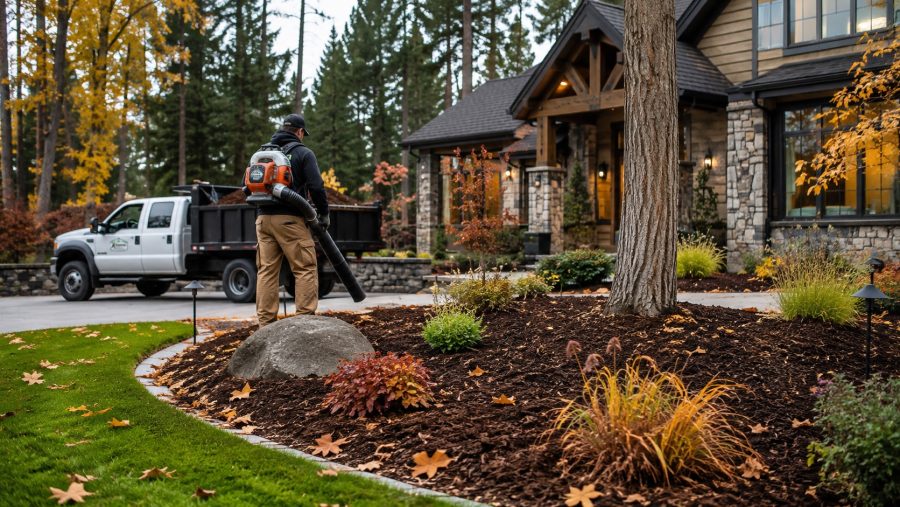
Alpine Bark Blowing offers professional bark blowing and bulk landscape material delivery throughout the Inland Northwest. Our blower equipment places bark into garden beds, slopes, and difficult-access areas while reducing wheelbarrow traffic across lawns and established landscapes.
Schedule late-season bark delivery or installation before winter conditions make landscape access difficult.