
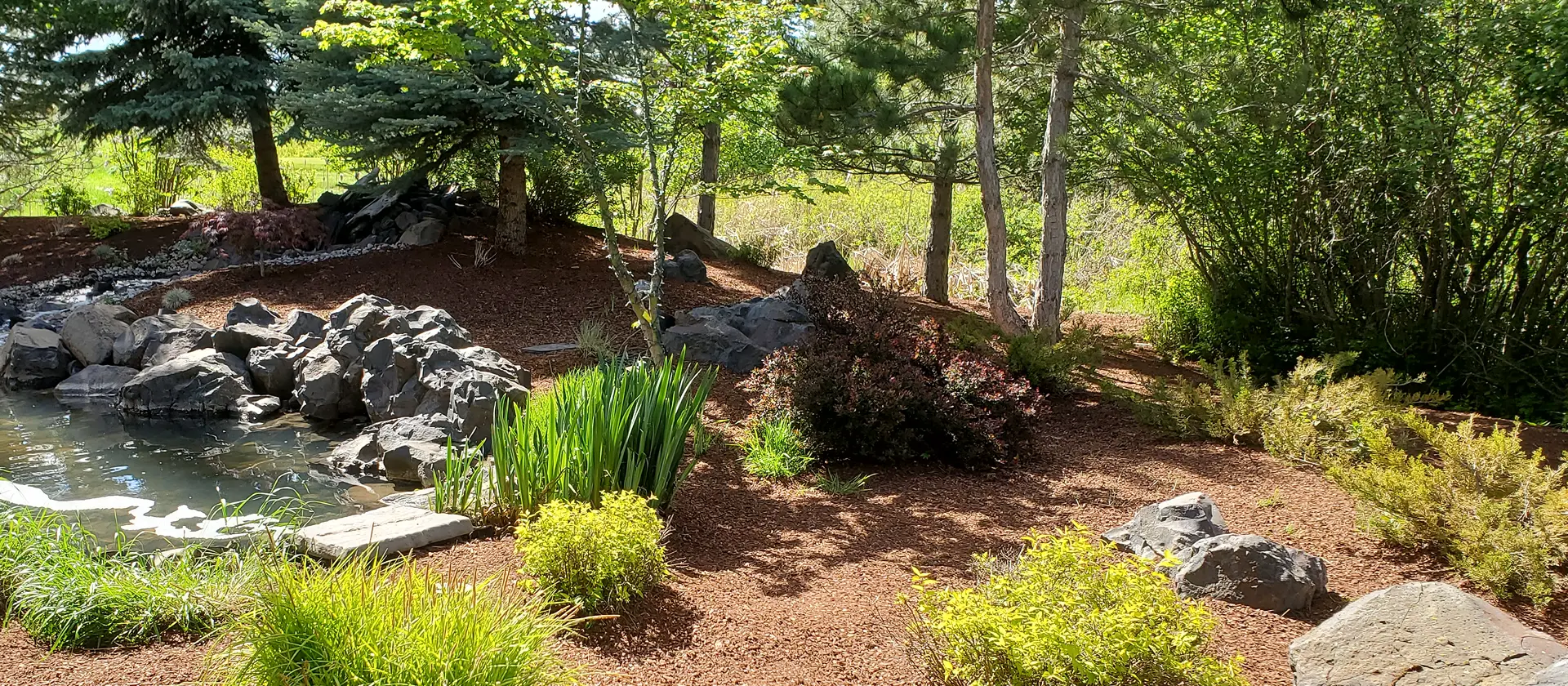
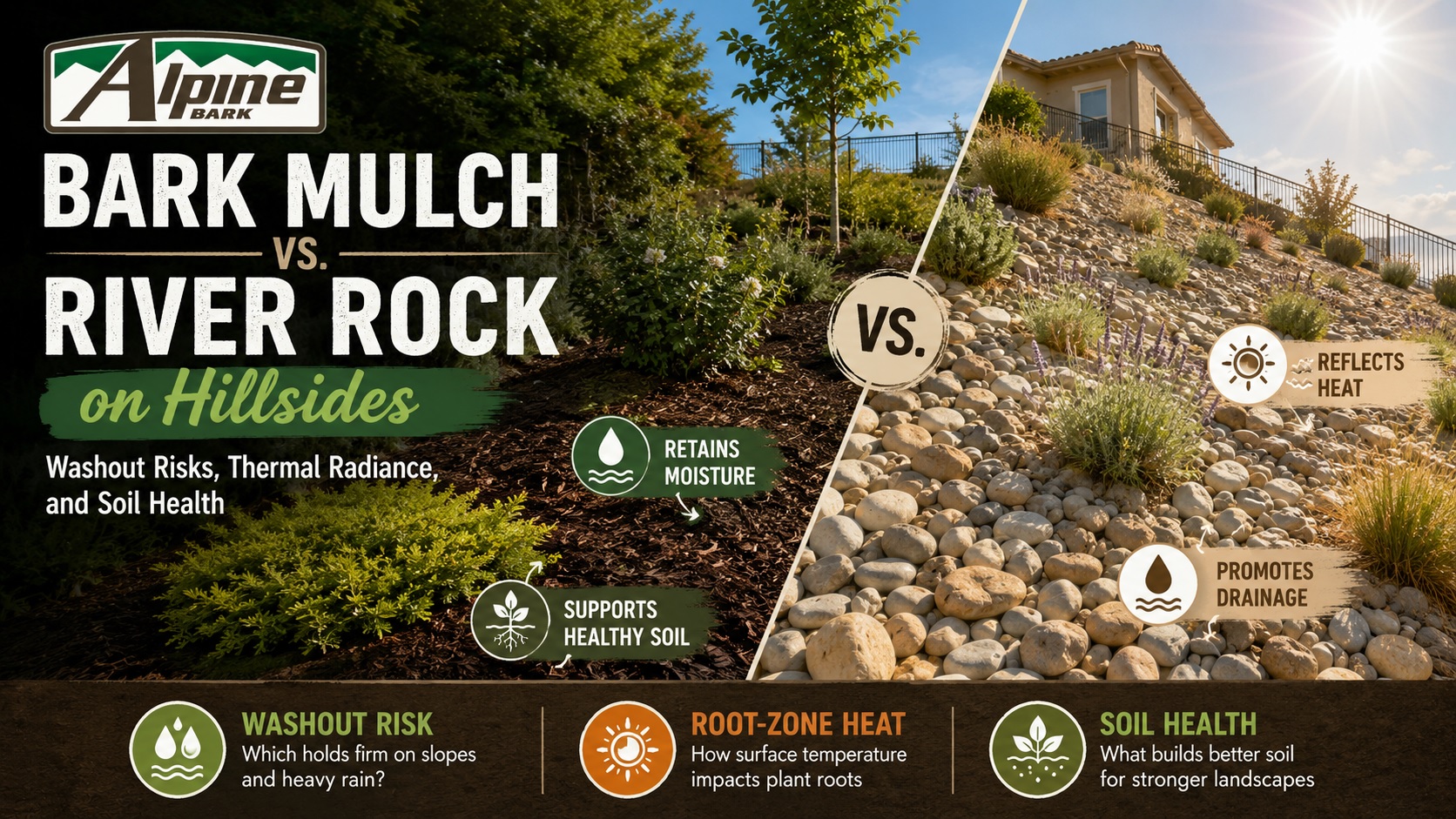
Bark mulch is usually the better hillside ground cover around trees, shrubs, and planting beds where root-zone temperature, moisture retention, and long-term soil health matter. River rock can be a stronger choice for drainage channels, dry creek beds, non-planted slopes, and areas exposed to concentrated runoff. Rock does not decompose, but it can absorb and radiate substantial summer heat. Washington State University warns that rock mulch may produce high soil temperatures during midsummer, while woody mulch reduces evaporation, protects soil from erosion, and supports healthier soil conditions.
At Alpine Bark Blowing, we recommend choosing hillside material based on slope, water movement, sun exposure, and what is growing underneath it. The best-looking material at installation is not always the best performer after July heat, spring snowmelt, and several Inland Northwest winters.
Rock vs. Mulch on a Slope: Which Stays Put?
The answer depends heavily on how water crosses the hillside.
Shredded bark has irregular fibers that can overlap and interlock. Alpine Bark uses bark on steep properties throughout the Spokane Valley and North Idaho area, and our local material guidance notes that shredded bark is less prone to shifting than lighter loose mulch products.
Bark can still move when runoff becomes concentrated into channels. No loose landscape material should be expected to correct a drainage problem by itself.
River rock brings substantially more mass. It performs especially well where water is intentionally being directed, such as:
- Dry creek beds
- Drainage swales
- Downspout discharge areas
- Erosion channels
- Culvert transitions
- Non-planted landscape bands
Our decorative rock selection includes 3/4-inch river rock, 1 1/2-inch river rock, mixed 1 1/2 to 4-inch river rock, Montana Rainbow products, basalt, and drainage rock. Alpine Bark specifically recommends river rock for drainage areas, dry creek beds, and erosion-control applications.
The Problem With Rounded Rock on Steep Grades
River rock is smooth and rounded.
That appearance works beautifully in drainage features, but rounded stones can shift downhill on steep slopes unless the design provides containment.
For steeper grades, we look at slope length, edging, terraces, larger anchor stone, vegetation, and runoff direction before simply covering the hill with loose rock.
Slope steepness itself increases surface-water and sediment movement, making drainage planning more important as grade increases.
Does Rock Mulch Heat Up Plant Roots?
Yes, this should be considered before surrounding heat-sensitive plants with stone.
Washington State University’s Pacific Northwest gardening guidance specifically cautions that rocks may generate high soil temperatures during midsummer.
That becomes especially relevant on south- and west-facing Inland Northwest slopes.
Rock absorbs solar energy throughout a hot July afternoon and releases that stored heat into the surrounding environment. The result can be a hotter root-zone microclimate than we would normally want around shallow-rooted shrubs, young trees, and perennials.
The effect becomes more important when:
- The slope receives full afternoon sun
- Dark basalt or other dark stone is used
- Plants have shallow roots
- Irrigation is limited
- Soil already drains rapidly
- Rock directly surrounds trunks or crowns
Rock can still work around drought-tolerant plants, but material choice and irrigation should match the exposure.
Bark Acts More Like Thermal Insulation
Organic bark behaves differently.
Rather than functioning as a heat-storing mineral surface, bark shades the soil and reduces direct solar heating.
Oregon State University notes that mulch moderates soil temperature and moisture, protects soil from solar energy, and reduces water evaporation. As organic mulch decomposes, it also contributes material used by soil microorganisms and adds to soil carbon.
That makes bark particularly useful around planted hillside beds.
Our premium bark mulch provides organic ground cover for residential and commercial landscaping throughout North Idaho and Eastern Washington.
Soil Health: Bark Has the Long-Term Advantage
Rock is durable because it does not break down.
That durability is helpful for drainage features, but it also means rock contributes essentially no organic matter to the soil underneath.
Bark gradually decomposes.
That natural decomposition contributes organic material and can help support:
- Soil structure
- Biological activity
- Moisture management
- Nutrient cycling
- Root-zone conditions
WSU notes that woody mulch reduces soil evaporation, improves soil health, suppresses weed-seed germination, and helps prevent erosion.
For heavily planted hillsides, those benefits usually make bark the stronger agronomic choice.
Bark Mulch and Water Retention
Water management matters just as much as heat.
A hillside naturally encourages water to move downslope before all of it can infiltrate.
Organic mulch slows evaporation after irrigation or rainfall and helps protect exposed soil from direct impact. Colorado State University recommends roughly 3 to 4 inches of mulch for reducing evaporation and notes that steeper slopes benefit from year-round plant cover for erosion control.
For planted slopes, we often favor a combination of bark and established vegetation rather than relying on loose material alone.
Roots stabilize soil while bark protects the surface between plants.
River Rock vs. Bark Cost
River rock vs. bark cost should be evaluated over the full life of the landscape.
Bark Mulch
Bark generally requires periodic topdressing because it gradually decomposes. Alpine Bark notes that a fresh bark topdress may typically be needed every one to three years depending on the product and exposure.
That recurring cost comes with a benefit: the material is continually contributing organic matter.
River Rock
River rock does not require regular replacement because it does not decompose.
However, initial installation can involve:
- Heavier delivery loads
- More labor or equipment
- Edging or containment
- Landscape fabric where appropriate
- Larger anchor stone
- Drainage preparation
Rock may therefore cost more to establish in some landscapes while requiring fewer material top-ups later.
Rather than comparing price per yard alone, we compare the 10-year purpose of the area.
Where We Recommend Each Material
Choose bark mulch for:
- Shrub beds
- Tree root zones
- Perennial hillsides
- Hot sunny planting areas
- Landscapes needing better soil conditions
- Areas where moisture conservation matters
Choose river rock for:
- Dry creek beds
- Drainage channels
- Downspout outlets
- Non-planted slopes
- High-runoff zones
- Permanent decorative features
A mixed design often works best.
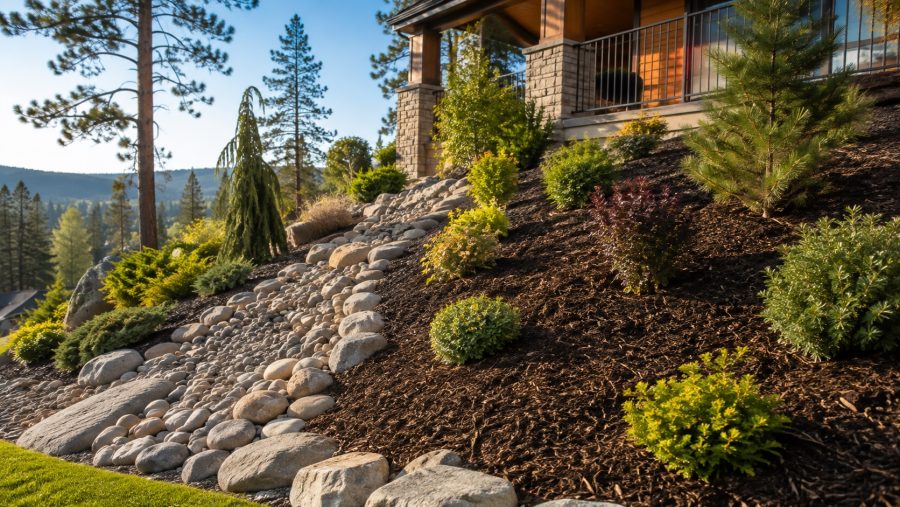
We may use bark around plants and transition to larger river rock where runoff concentrates. That gives roots the cooler organic environment they need while placing durable mineral material where water carries the greatest erosive force.
Design the Hillside Around Water, Heat, and Roots
The question is not simply rock vs mulch on slope.
We want to know where water travels, how hot the hillside becomes in July, what plants occupy the slope, and how much long-term maintenance the property owner wants.
Bark provides thermal buffering, moisture conservation, and organic matter. River rock provides permanent coverage, drainage capacity, and durability where moving water demands heavier material.
Request a bulk quote for decorative rock or premium bark mulch from Alpine Bark Blowing for your next Spokane, Coeur d’Alene, Post Falls, or Inland Northwest hillside project.