
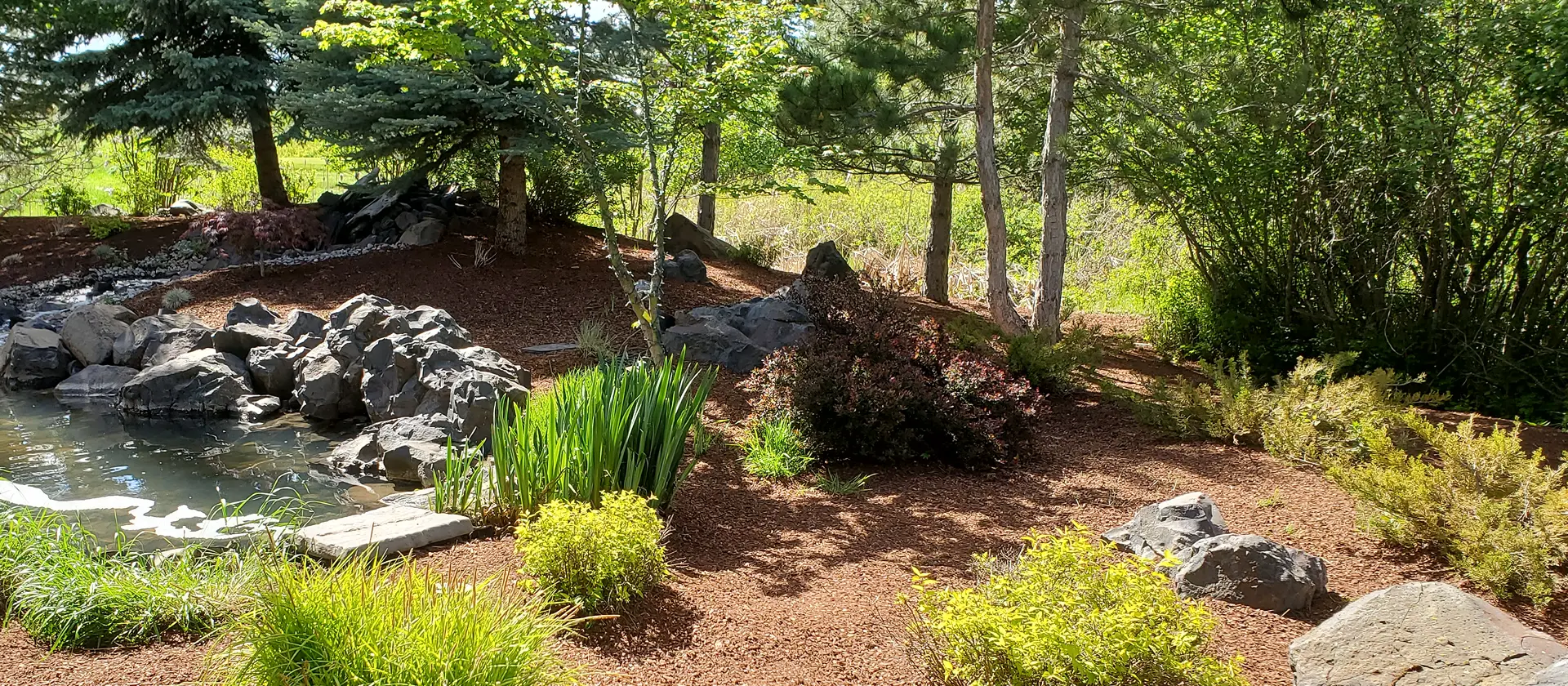

When comparing terraseeding vs hydroseeding, the biggest difference is what reaches the soil. Hydroseeding sprays a water-based slurry containing seed, mulch, fertilizer, and other additives. Terraseeding places seed directly into a pneumatically blown compost blanket, combining vegetation establishment with immediate physical soil coverage. At Alpine Bark Blowing, we see seeded compost applications as especially valuable on steep, rocky, disturbed, or difficult-to-access slopes where contractors need slope stabilization erosion control and a growing medium in one installation. U.S. EPA guidance confirms that seed can be mixed directly into compost before pneumatic application, helping distribute seed evenly and reducing the chance of seed washing away during stormwater runoff.
What Is Terraseeding?
Terraseeding is a pneumatic application process where grass, wildflower, native, or erosion-control seed is introduced into compost as the material moves through a blower system.
Instead of placing seed on bare mineral soil and covering it afterward, the seed becomes distributed throughout the compost blanket.
The installed layer performs several jobs at once:
- Covers exposed soil immediately
- Holds moisture around seed
- Cushions rainfall impact
- Slows surface runoff
- Adds organic matter
- Creates seed-to-compost and soil contact
- Supports germination
- Reduces the chance of seed washing downslope
EPA stormwater guidance notes that compost blankets can provide a suitable microclimate for germination while retaining substantial amounts of water and reducing erosion.
Our erosion-control services use blower equipment to place compost across challenging terrain, including highway work, remediation sites, slopes, and private properties.
How Hydroseeding Works
Hydroseeding takes a different approach.
Seed is mixed into a tank with water and usually fiber mulch, fertilizer, tackifier, or related amendments. A pump and hose then spray that slurry across prepared soil.
Hydroseeding can work extremely well on:
- Newly graded lawns
- Large open sites
- Roadside areas
- Commercial landscapes
- Moderate slopes
- Sites where existing soil is already suitable for germination
The sprayed mulch helps protect seed and conserve moisture, but the application does not typically create the same thick organic surface layer as a compost blanket.
That distinction becomes more important as erosion risk increases.
Terraseeding vs. Hydroseeding
| Factor | Terraseeding | Hydroseeding |
|---|---|---|
| Application medium | Blown compost with seed | Water-based seed slurry |
| Immediate soil cover | Substantial compost blanket | Thin mulch layer |
| Adds organic growing medium | Yes | Limited |
| Seed distribution | Mixed through compost | Suspended in slurry |
| Steep or rocky access | Excellent with blower hose | Good with proper equipment |
| Moisture retention | High | Depends on mulch and watering |
| Erosion protection before growth | Strong physical blanket | Mulch-based protection |
| Best fit | Disturbed slopes, poor soils, restoration | Lawns, graded areas, broad seeding |
Neither method is automatically best for every project.
We look at slope grade, soil condition, runoff, access, seed specification, project schedule, and required erosion-control performance before choosing an application.
Why Compost Coverage Matters Before Seed Germinates
Vegetation cannot stabilize a construction slope until roots become established.
That creates a vulnerable period immediately after seeding.
A compost blanket starts protecting the soil as soon as it is installed. The EPA reports that properly applied compost can absorb rainfall energy, increase infiltration, maintain sheet flow, and reduce erosion before vegetation becomes established.
Recent EPA analysis also cites field research where seeded compost blanket treatments produced substantially lower stormwater runoff than conventional hydroseeding treatments in specific test conditions. Those results do not mean compost will outperform hydroseeding on every site, but they show why compost blankets are valuable where immediate erosion control is a major project requirement.
For additional technical background, contractors can review the U.S. EPA compost blanket guidance.
Why Seed-to-Soil Contact Improves Establishment
Seed sitting loosely on top of a dry slope can move with wind, runoff, equipment traffic, or heavy rainfall.
Terraseeding distributes seed within the compost blanket instead.
EPA guidance specifically notes that incorporating seed before compost application helps produce more even distribution and reduces the risk of seed washing off the surface.
The compost also surrounds seed with a moisture-holding organic medium.
That can be especially useful on exposed subsoil after:
- Road construction
- Utility work
- Commercial development
- Land clearing
- Grading
- Mine or industrial remediation
- Large-scale earthwork
The objective is not simply getting seed onto the slope. The objective is creating conditions that help vegetation establish quickly enough to become part of the long-term stabilization system.
How a Pneumatic Seeding Blower Truck Handles Steep Terrain
A pneumatic seeding blower truck allows material to reach slopes that may be difficult or damaging to access with loaders, spreaders, or repeated wheelbarrow traffic.
EPA guidance specifically recommends pneumatic blower equipment where terrain is too steep or rocky for conventional heavy equipment.
At Alpine Bark Blowing, our pneumatic equipment can move material through long hoses while the truck remains away from sensitive areas.
Our professional blower truck service provides more than 250 feet of reach for uniform material placement without driving heavy machinery across the entire jobsite.
That can make the process particularly useful around embankments, roadside cuts, stormwater facilities, commercial developments, and restoration sites.

Steeper Slopes May Need More Than Seed and Compost
Terraseeding is not a substitute for engineering.
Sites with concentrated runoff, unstable soil, severe grades, channels, or major geotechnical concerns may require additional controls such as:
- Compost socks
- Diversion berms
- Erosion-control netting
- Rolled erosion-control products
- Drainage improvements
- Structural stabilization
EPA guidance notes that steep slopes can benefit from netting or additional BMPs and that compost blankets should not be expected to manage concentrated channelized flow by themselves.
Choosing Terraseeding for Commercial Erosion Control
For civil contractors, landscape contractors, developers, and municipalities, the strongest reason to consider Terraseeding is efficiency.
One pneumatic application can place the growing medium, erosion-protection blanket, and seed across difficult terrain without relying on several separate installation crews.
At Alpine Bark Blowing, we can help evaluate access, coverage area, compost volume, slope conditions, and blower-truck requirements for erosion-control projects throughout North Idaho and the Spokane region.
When bare soil needs protection now and vegetation needs to follow quickly, seeded blown compost can create a practical bridge between immediate erosion control and long-term vegetative stabilization.