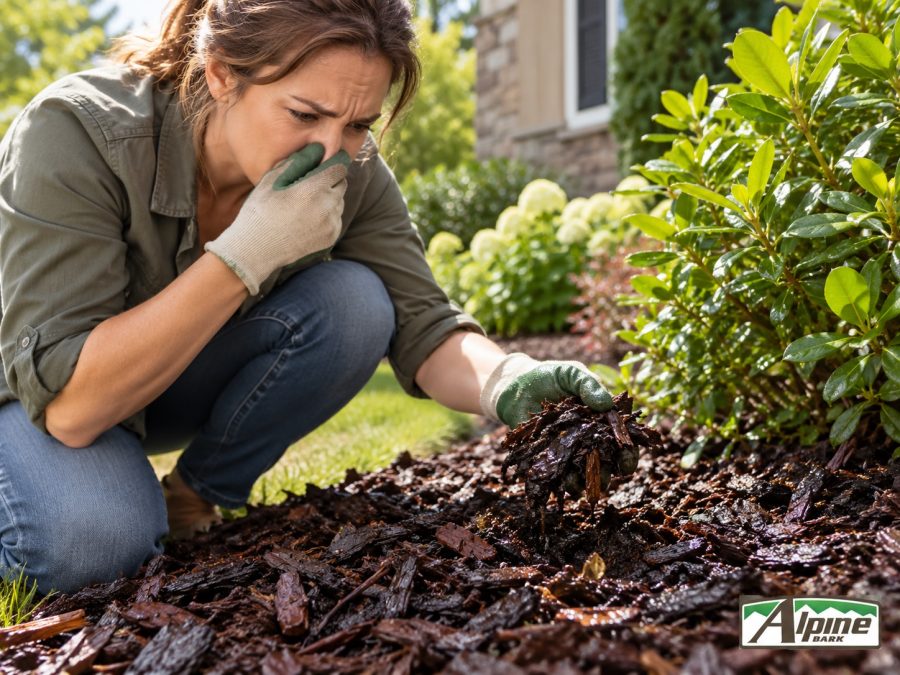
When mulch smells bad, especially like vinegar, alcohol, ammonia, or sulfur, it may be sour mulch. Sour mulch develops when wood mulch is stored in a large, wet, compacted pile with too little oxygen. Anaerobic microorganisms can then produce compounds such as acetic acid that create strong odors and may damage nearby plants. UConn Home & Garden Education Center recommends spreading affected mulch thinly, soaking it with water, and allowing it to air out before placing it around plants.
At Alpine Bark Blowing, we expect healthy bark mulch to have a natural woody or earthy aroma. A sharp vinegar-like odor deserves attention before that material goes around valuable trees, shrubs, and perennials.
Why Does Mulch Smell Bad?
Fresh organic mulch has a scent because bark and wood naturally contain moisture and begin decomposing after processing.
A mild earthy, woody, or forest-like smell is normal.
The problem starts when mulch develops a strong sour odor that resembles:
- Vinegar
- Alcohol
- Ammonia
- Sulfur or rotten eggs
- Fermented vegetation
When customers tell us their mulch smells like vinegar, sour mulch is one of the first conditions worth considering.
UConn explains that sour mulch develops when wood-derived material is piled high enough that the material inside becomes deprived of oxygen. Anaerobic activity can then produce acetic acid and other compounds responsible for the smell.
What Is Sour Mulch?
Sour mulch is wood mulch that has undergone anaerobic fermentation.
Normally, air circulates through a mulch pile and supports aerobic decomposition. If the pile becomes too large, saturated, or tightly compacted, oxygen may not penetrate into its center.
Microorganisms still remain active, but decomposition changes under those low-oxygen conditions.
The result can be the production and accumulation of organic acids and other volatile compounds.
That is why sour mulch does not simply smell stronger than normal bark. It can smell chemically sharp.
The odor itself is a warning that we should inspect and aerate the material before using it.
Can Sour Mulch Hurt Plants?
Yes.
This is the biggest difference between ordinary decomposing mulch and true sour mulch.
UConn reports that the acetic acid associated with sour mulch can be toxic to plants when affected material is applied directly around them. Plants may wilt rapidly after exposure.
Possible symptoms include:
- Wilted foliage
- Yellow leaves
- Bleached-looking leaves
- Brown or scorched leaf edges
- Premature leaf drop
- Damage to tender annuals and perennials
Damage may appear quickly, especially during warm weather when volatile compounds are released rapidly.
Trees and established woody shrubs may tolerate exposure better than tender plants, but we still would not recommend knowingly spreading sour mulch around any landscape.
Does Bad-Smelling Mulch Mean It Is Rotten?
Not necessarily.
Organic mulch is supposed to decompose.
Bark, wood chips, and similar landscape materials gradually break down as fungi, bacteria, moisture, and weather act on them. That process can create earthy smells without creating a plant hazard.
The easiest distinction is the character of the odor.
Normal mulch: woody, earthy, forest-like, compost-like.
Potential sour mulch: sharp vinegar, alcohol, ammonia, fermented, or sulfur smell.
A natural organic smell is expected. A smell that makes us immediately pull away from the pile deserves further evaluation.
What Should We Do If Mulch Smells Like Vinegar?
Do not spread it around plants immediately.
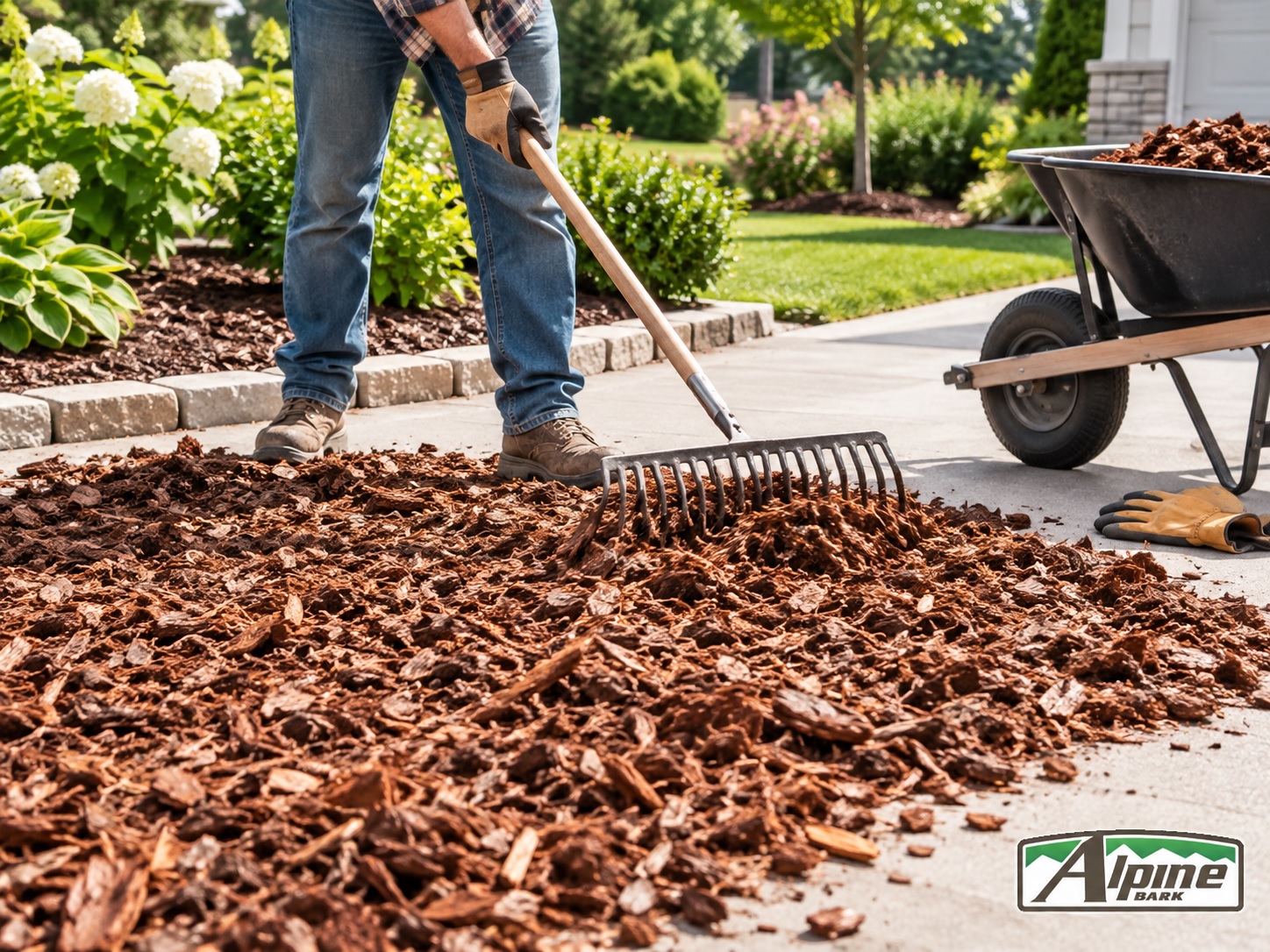
UConn recommends aerating sour mulch by spreading it into a thin layer, wetting it, and allowing it to dry. After several days of exposure to air, the volatile compounds should dissipate and the strong odor should disappear.
A practical approach looks like this:
1. Stop Applying the Mulch
If a fresh load suddenly smells strongly of vinegar or ammonia, pause the project.
2. Spread the Pile Out
Reduce the depth of the pile so oxygen can reach more of the material.
3. Turn the Material
Mixing and turning the mulch exposes areas that may have remained oxygen-starved inside the pile.
4. Wet and Air It Out
Water can help flush acidic compounds while exposure to air allows volatile substances to dissipate.
5. Smell It Again Before Installation
Once the sharp sour odor is gone and the mulch smells normally woody or earthy, it is much safer to use.
What If Sour Mulch Is Already Around Plants?
Act quickly.
Pull the affected mulch away from plant stems and root zones. Water the surrounding soil thoroughly to help dilute and move remaining compounds through the soil.
Avoid immediately adding another thick layer on top.
We would rather expose the area temporarily than trap sour material against stressed vegetation.
Once the affected mulch has been aerated and the odor has dissipated, the landscape can be reevaluated.
Can Deep Mulch Make the Problem Worse?
Deep mulch in the landscape is not exactly the same as sour mulch forming inside a stockpile, but excessive depth can restrict airflow and hold too much moisture.
At Alpine Bark Blowing, we generally focus on maintaining an effective layer rather than continuously piling new mulch over old material.
Our guide to the 3-inch mulch rule explains why excessive mulch can contribute to moisture, airflow, and root-zone problems.
Start With the Right Bark Product
Quality material, proper storage, and correct installation all matter.
Alpine Bark supplies bark mulch, wood chips, soil, compost, decorative rock, and other landscape materials for homeowners, contractors, and commercial projects throughout North Idaho and the Spokane region.
When mulch smells naturally woody or earthy, decomposition is doing what we expect.
When mulch smells bad with a sharp vinegar, alcohol, or ammonia odor, we recommend stopping before application and giving the material time to aerate.
The smell is not something to cover up. It is a clue about what has been happening inside the pile.