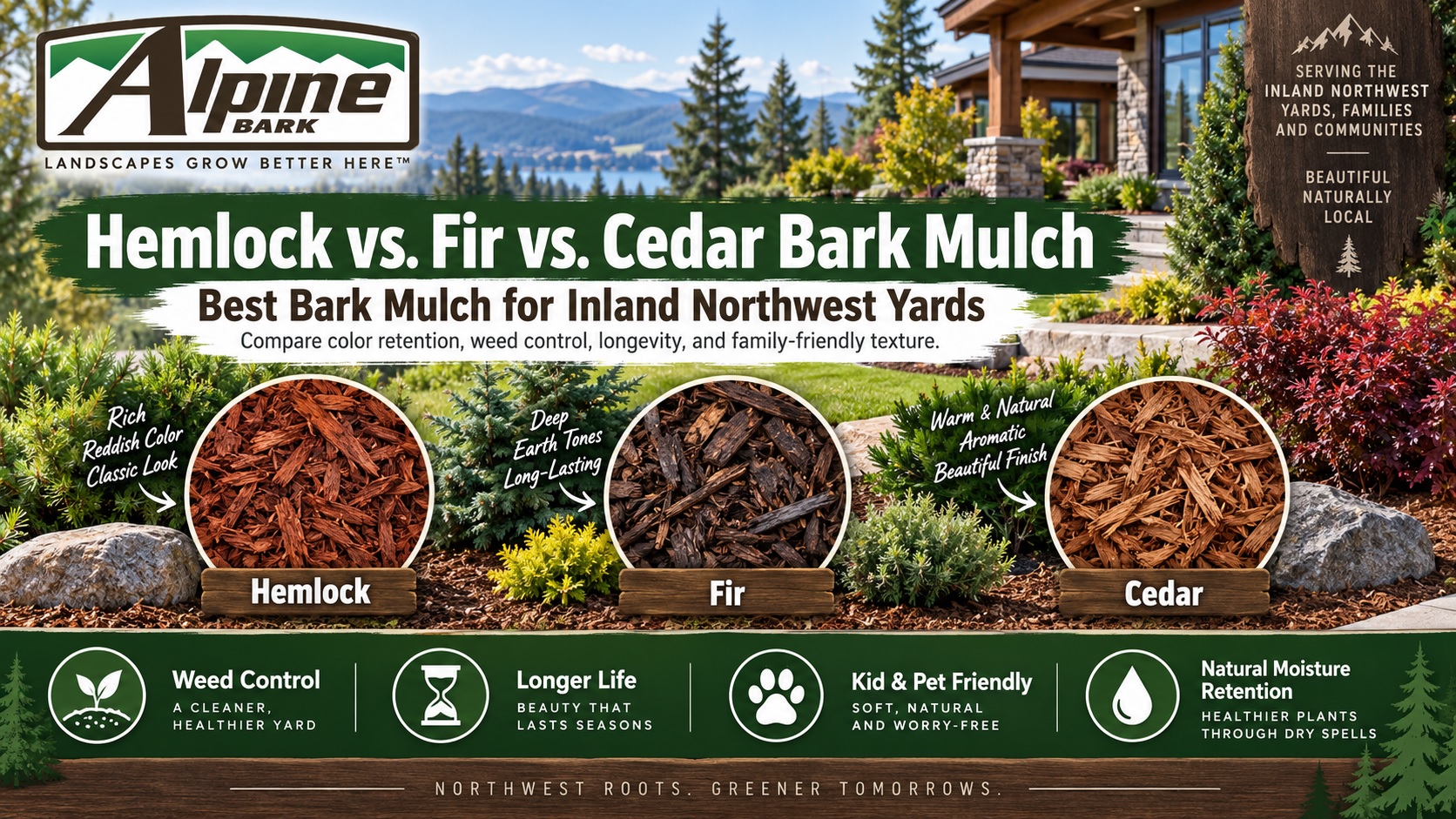
For Inland Northwest landscapes, the best bark mulch depends on the bed and the result we want. Fine or dark bark is our preferred option for weed suppression and a smooth, finished appearance, while fir bark and larger nuggets work well when longevity, slope stability, and a natural Northwest look matter most. Cedar can be attractive where aroma and slower decay are priorities, but it should not be treated as a guaranteed insect-control product. Alpine Bark recommends a 2 to 3-inch mulch layer for most beds and reports that bark can typically last about 2 to 3 years at that depth, depending on slope and traffic.
At Alpine Bark Blowing, we match bark texture and size to the property instead of choosing mulch by color alone.
Hemlock Mulch vs. Dark Fir vs. Cedar at a Glance
| Bark Type | Appearance | Weed Control | Longevity | Best Use |
|---|---|---|---|---|
| Hemlock | Rich reddish-brown to dark | Very good when finely processed | Good | Decorative beds and refined landscapes |
| Fir | Natural red-brown to dark | Excellent depending on grade | Very good | Slopes, large beds, exposed landscapes |
| Cedar | Warm natural color | Very good | Very good | Natural landscapes and aromatic beds |
| Dark Fine Bark | Dark chocolate, uniform | Excellent | Good | High-visibility beds and cleaner surfaces |
An important point gets missed in many hemlock mulch vs. dark fir comparisons: particle size and processing can matter just as much as tree species.
A fine bark product behaves differently from a 1 or 2-inch nugget even when both come from similar conifer species.
Hemlock Bark: Smooth, Decorative Ground Cover
Hemlock bark is popular throughout the Pacific Northwest for its natural color and decorative appearance.
Oregon State University lists Douglas-fir and hemlock among common bark products in the Pacific Northwest and notes that bark generally lasts a long time and provides effective weed control. Larger nuggets tend to last longer and compact less than finer grades.
Hemlock can work well around:
- Shrubs and ornamental trees
- Foundation beds
- Perennial gardens
- High-visibility landscaping
- Properties seeking a softer, natural appearance
When children’s play areas or pets are a concern, we recommend looking at the actual texture and processing rather than assuming a particular species will always be sliver-free.
Fir Bark: A Strong All-Around Choice
Fir is one of our favorite materials for Inland Northwest conditions because it combines appearance, durability, and moisture protection.
Alpine Bark’s premium nuggets are made from fresh Red Fir bark. Our small nuggets are approximately 1 inch, while our medium nuggets are approximately 2 inches. We also offer fine and medium bark products for projects needing different textures.
Larger fir bark works especially well for:
- Larger landscape beds
- Sloped properties
- Rustic landscapes
- Areas exposed to seasonal weather
- Beds where slower breakdown is preferred
Our Rustic Medium Bark is chipped and shredded at approximately 1 1/2 inches minus and is designed to hold well on hillsides while standing up to changing weather conditions.
Cedar Bark: Does Cedar Bark Repel Bugs?
The answer requires some nuance.
Cedar contains aromatic compounds associated with insect-repellent properties, and Alpine Bark notes that aromatic cedar’s natural oils can discourage some local pests.
However, we would not use cedar mulch as the primary pest-control strategy.
Organic mulch can still provide shelter for insects and other small organisms, especially when piled too deeply or placed directly against a foundation. Keeping a clear space between mulch and siding or foundations is a better preventive practice.
For landscapes where cedar is being considered, choose it primarily for its texture, appearance, durability, and aroma. Treat any pest-deterrent effect as an added benefit rather than guaranteed protection.
What Is the Best Bark Mulch for Weed Control?
For weed suppression, depth and coverage matter at least as much as species.
Fine bark can create a tighter surface that blocks sunlight from reaching weed seeds. Alpine Bark’s Dark Fine Bark is aged for a rich chocolate color and screened to 1/2 inch minus, creating a consistent surface with strong weed-suppressing performance.
A good target for most established beds is 2 to 3 inches.
Too little material leaves gaps where weeds can germinate. Excessively deep mulch can hold too much moisture around plants.
For local product options, explore our bark mulch selection.
Which Mulch Is Better for Kids and Pets?
Species alone does not determine whether bark feels comfortable underfoot.
Processing matters.
Our Dark Fine Bark is finely screened, and Alpine Bark describes the product as having a smooth, sliver-free texture. That makes fine bark an attractive option around residential landscapes where people frequently walk, garden, or play.
Larger bark nuggets offer greater durability but naturally create a coarser surface.
For an actual playground fall surface, use a product manufactured and rated for playground applications rather than ordinary decorative bark.
How Long Does Bark Mulch Last?
Our general expectation is about 2 to 3 years when bark is installed 2 to 3 inches deep.
Actual lifespan changes with:
- Bark particle size
- Direct sun exposure
- Foot traffic
- Slope
- Irrigation
- Snow and rain
- Organic decomposition
Fine bark may need cosmetic refreshing sooner because its texture and color change as it ages. Larger fir nuggets generally break down more slowly.
Which Bark Would We Choose?
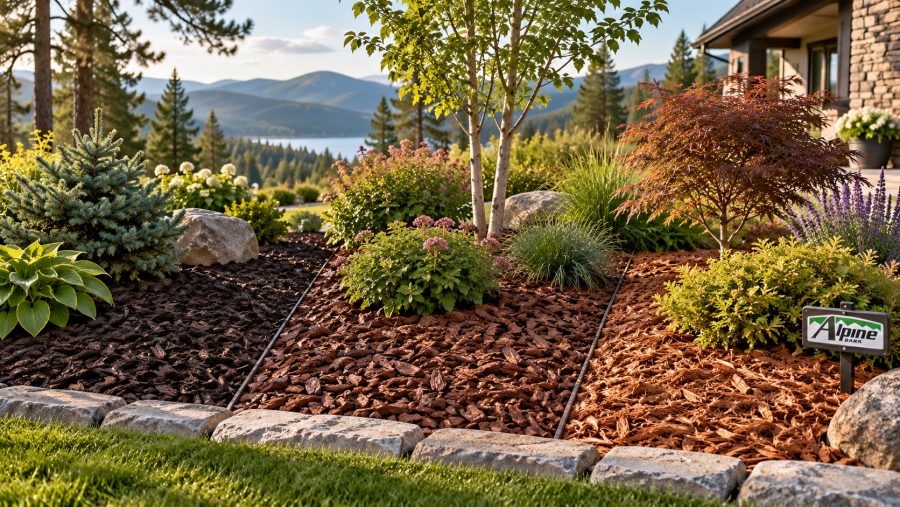
For a polished residential bed and strong weed control, we would lean toward Dark Fine Bark. For slopes, exposed areas, and a more natural appearance, fir-based medium bark or Red Fir nuggets are excellent choices. Cedar can make sense when aroma and natural durability are priorities, while hemlock remains a proven decorative bark option throughout the Pacific Northwest.
In the Inland Northwest, the right mulch also needs to handle dry summer conditions and cold winters. Bark helps reduce evaporation, suppress weeds, and insulate roots through those seasonal temperature swings.
At Alpine Bark Blowing, we offer bulk bark, delivery, pickup, and professional bark blowing services for landscapes throughout North Idaho and Eastern Washington.
Ready to Refresh Your Landscape?
Contact Alpine Bark Blowing to compare bark textures, calculate yardage, and choose a product that fits the beds, slopes, appearance, and maintenance goals of the property.